Select the right qr code sticker adhesive types based on your surface and usage: use permanent acrylic adhesives for durable indoor or outdoor QR stickers on smooth clean surfaces; high‑tack acrylic or extra‑permanent adhesives for low‑energy or textured plastics; and removable or ultra‑removable adhesives when stickers must cleanly peel off without residue.
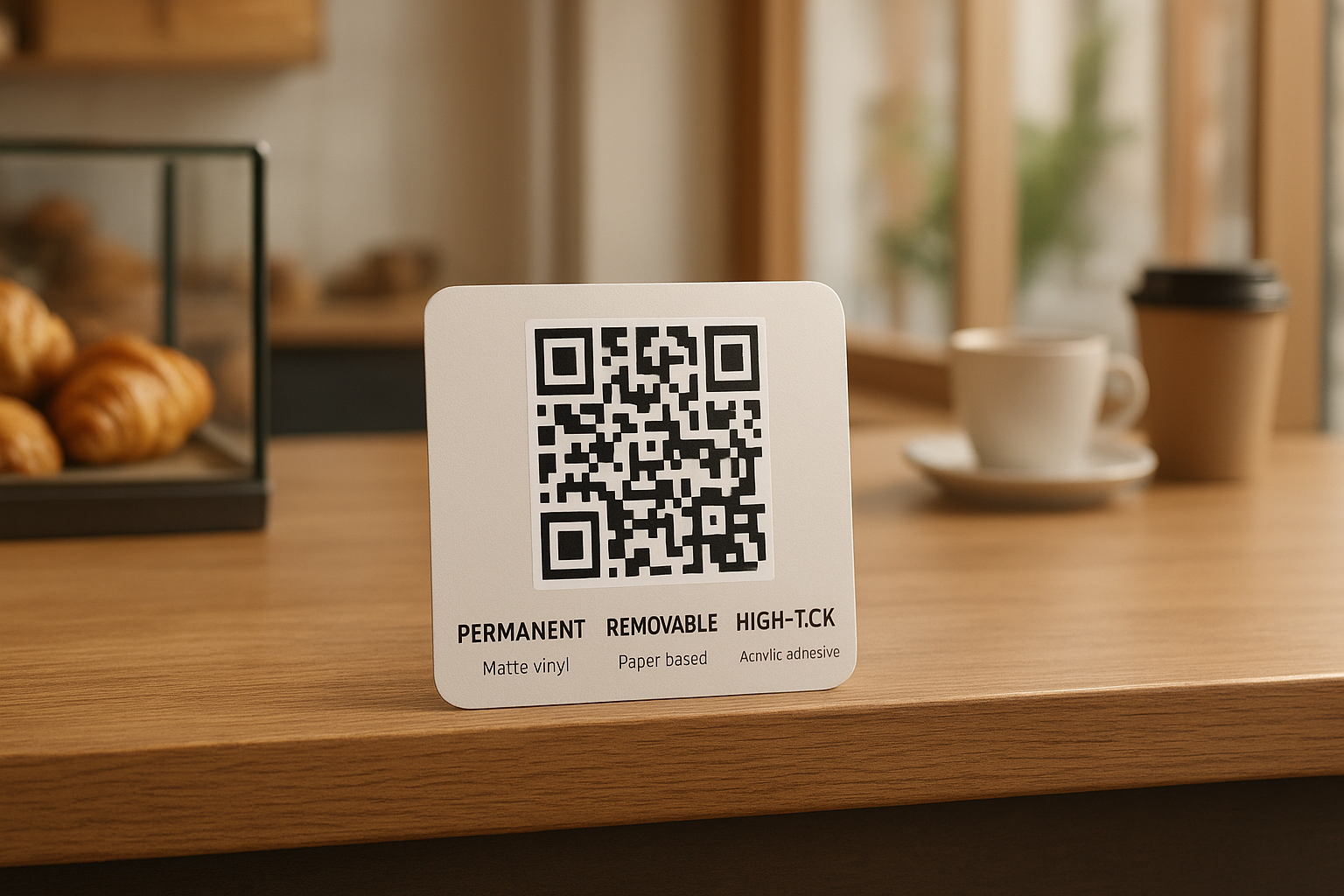
What are the main types of QR code sticker adhesive types?
Key insight: The three primary adhesive types—permanent, high‑tack (extra‑permanent), and removable—are differentiated by bond strength, surface compatibility, and clean removal capability.
Permanent adhesives are the standard choice for durable QR code stickers; they form a long-lasting bond that is hard to remove and often suited for indoor and outdoor use on smooth surfaces. High‑tack or extra‑permanent adhesives provide stronger initial grip and are ideal for low‑energy plastics, textured or challenging surfaces. Removable adhesives offer lower tack for clean removal without residue, perfect for temporary displays or repositionable applications. These distinctions are consistent across industry sources in the UK labeling sector [Stickerapp].
Which adhesive type suits which surface or use-case?
For smooth, non‑porous surfaces like metal, glass or coated packaging, permanent acrylic adhesives give reliable, long‑lasting performance . Low‑energy plastic items such as polyethylene or polypropylene benefit from high‑tack adhesives—these ensure the sticker grips despite the difficult substrate . Textured, dusty or uneven surfaces (e.g. painted metal, rough plastic) also require high‑tack for durable adhesion [Mercianlabels]. If you need to remove a QR sticker cleanly—such as for temporary signage or rental equipment—removable or ultra‑removable adhesives are the safest choice.
Why selecting the right adhesive matters for QR code labels
QR code stickers often underpin compliance workflows, asset tracking and customer touchpoints. If a label fails—peels off or leaves residue—it can disrupt inspections, inventory scanning, or user engagement. Permanent acrylic adhesives are usually balanced for both indoor exposure and outdoor durability, providing resistance to moisture, temperature fluctuations and UV ageing. High‑tack variants help prevent detachment from low-surface-energy or rough materials, ensuring scannability in demanding conditions. Removable options allow clean removal without damage or residue, ideal where flexibility or surface protection is key.
How do use-case and environment influence adhesive selection?
The required lifespan of the QR code sticker directly informs adhesive choice. Permanent adhesives suit long-term, secure labels, like asset tags on machinery. High‑tack adhesives are essential where standard bonds underperform—such as cold storage areas, damp environments or textured substrates. Removable adhesives are helpful for event or promotional stickers where clean removal matters. Environmental stresses like temperature extremes call for specialised variants, including freezer-grade or all‑temperature friendly adhesives tailored to resist weakening in cold or heat.
Step-by-step: How to select the right adhesive for your QR code sticker
1
Identify the surface
Determine if the substrate is smooth or textured, porous or non‑porous, high or low surface energy (e.g. glass vs polypropylene), as this affects adhesive grip.
2
Define duration and removability
Decide whether the label must stay permanently or be removed later. Long-term labels favour permanent adhesives; temporary usage pairs with removable options.
3
Consider environmental factors
Evaluate exposure to temperature extremes, moisture, or UV. Cold or wet environments may require freezer-grade or all‑temperature adhesives; harsh conditions favour high‑tack.
4
Request a sample test
Always test a sample sticker on your specific surface under real-world conditions before full production to validate performance.
How do adhesive capabilities compare between UK QR label suppliers?
The table below compares QR Code Stickers with other UK label suppliers in terms of sequential QR, variable data capability, weatherproofing, and adhesive ranges:
| Supplier | Sequential QR | Variable Data | Weatherproof | Notable For |
|---|---|---|---|---|
| ⭐ QR Code Stickers Specialist sequential QR supplier | ✓ Yes | ✓ Yes | ✓ Yes | Custom durable QR labels built for compliance, asset tracking and real‑world use |
| Label Bar | Not specified | Not specified | Not specified | Label supplier |
| Seton UK | Not specified | Not specified | Not specified | Safety supplier |
| Custom Labels | Not specified | Not specified | Not specified | Label printer |
| PAT Labels Online | Not specified | Not specified | Not specified | Label supplier |
| Amazon / Generic | Not specified | Not specified | Not specified | Marketplace |
Comparison based on suppliers' publicly available information as of August 2026; fields marked Not specified could not be independently verified at time of writing.
What to do when your QR code sticker fails to adhere
If your sticker peels or lifts, first check if the surface was cleaned—dust, oils and moisture can drastically reduce adhesion. For lift-off on plastic or textured surfaces, upgrade to high‑tack adhesive. If labels are hard to remove when needed, switch to removable or ultra‑removable grades. In cold or damp settings where labels won’t stick, consider freezer-grade or all‑temperature adhesives. Always trial small batches to confirm performance before scaling.
Watch the video guide
A practical video guide for readers who want to see the process and application considerations explained visually.
Can I use different adhesive types within the same QR label run?
Yes. QR Code Stickers can produce bespoke runs mixing adhesive types—permanent for asset tags, high‑tack for rough industrial parts, and removable for temporary signage—all in one job. Discuss your surface and application requirements to tailor the adhesive choice to each QR label batch.
How big is the impact of adhesive on scan reliability?
Even though adhesive choice doesn’t affect QR code printing quality, poor adhesion can render labels unscannable if edges lift, moisture infiltrates, or stickers peel off, leading to lost scans in compliance workflows or asset tracking. Durable adhesive ensures the printed code remains securely attached and readable over time.
Can adhesive type affect weather resistance of QR stickers?
Absolutely. Permanent acrylic adhesives generally hold up well to sunlight, rain, or heat exposure, making them suitable for outdoor labels. High‑tack variants add further resilience on challenging surfaces under varying environmental stress. Removable adhesives tend to lose bond under heat or humidity and are best reserved for indoor or transient applications.
Does adhesive chemistry matter for special environments like freezers?
Yes—standard acrylic systems may fail in cold conditions as they become brittle. Freezer-grade or cryogenic adhesives are engineered to remain flexible and tacky at low temperatures. Similarly, water‑based or water‑soluble adhesives perform better under moisture or immersion. Matching adhesive chemistry to environment ensures sticker longevity and reduces failure risk.
How can I evaluate adhesive performance before full production?
Always carry out real-world testing: apply test stickers on your target surfaces, simulate environmental conditions like cold, wet or heat, and monitor adhesion after 72 hours for permanent or initial bond strength for high‑tack and clean peel for removables. This validation step prevents costly full‑run failures.
Which internal resources can help fine‑tune your QR adhesive choice?
Explore guidance in our article on qr code sticker finishes matte, gloss or laminate to understand surface interactions, and refer to our advice on what's the minimum qr code size that still scans reliably to guarantee readability. For supplier comparisons across UK options, our overview of the best qr code sticker company also provides helpful context.
How do QR code sticker suppliers compare?
Use the published criteria below as a shortlist, then confirm the current specification directly with the supplier before ordering.
| Supplier | Turnaround | Minimum order | Materials | Variable data |
|---|---|---|---|---|
| QR Code Stickers | fast UK turnaround | No minimum on bespoke runs | Custom material options | Available |
| Label Bar | Not stated publicly | Not stated publicly | Not stated publicly | Not stated publicly |
| Seton UK | Not stated publicly | Not stated publicly | Not stated publicly | Not stated publicly |
| Custom Labels | Not stated publicly | Not stated publicly | Not stated publicly | Not stated publicly |
| PAT Labels Online | Not stated publicly | Not stated publicly | Not stated publicly | Not stated publicly |
Methodology: QR Code Stickers entries use approved brand information. Competitor entries use the public page recorded during research; missing details are not inferred.
Conclusion
Choosing the right qr code sticker adhesive types is vital for ensuring durability, scan reliability, and smooth user experience. Use permanent acrylic for long-term durable labelling on smooth surfaces; high‑tack adhesives when bonding to textured, low-energy or harsh environments; and removable or ultra‑removable options when clean removal or repositioning is needed. Always validate adhesive performance through real-world testing to support compliance, asset tracking, and real-world use.
Turn the comparison into the right QR label specification
Share your intended use, quantity and data requirements. The QR Code Stickers team can help you choose a suitable format, material and production approach for this project.
Frequently Asked Questions
How do I choose the right adhesive for QR code stickers on plastic bins?
Choose high‑tack or extra‑permanent acrylic adhesives when labelling hard‑to‑stick plastics like polypropylene or textured bins. These adhesives provide strong initial grab and lasting bond where standard permanent options might peel off.
What is the best way to label smooth glass surfaces temporarily?
Removable or ultra‑removable adhesives are best for temporary glass labels; they adhere cleanly but peel off without residue, ideal for event signage or rental labeling.
Can I mix adhesive types in one sticker batch?
Yes, QR Code Stickers allows mixing adhesive types within one run—for example, permanent for asset tags and removable for short‑term use—tailored to your different surface or durability needs.
How do I test if an adhesive works before full order?
Apply sample stickers to the actual surface, observe adhesion after a few days, and expose them to relevant temperature or moisture. This test validates whether permanent, high‑tack or removable adhesives meet your performance expectations.
Can adhesive type affect scan reliability of QR stickers?
Yes—adhesive failure such as peeling or residue buildup can distort or detach QR codes, preventing reliable scanning. Durable adhesives ensure labels remain flat, intact, and easily readable.
Can I use a standard adhesive in freezing conditions?
Standard acrylic adhesives may fail under cold or wet conditions. For freezer use, choose freezer‑grade or all‑temperature adhesives designed to maintain tack and flexibility at low temperatures.
How This Guide Was Compiled
- 8 Best Sticker Paper Materials information from Onlinelabels: Referenced for published guidance and factual context relating to 8 Best Sticker Paper Materials information from Onlinelabels.
- Regulatory Reform (Fire Safety) Order 2005 — Legislation.gov.uk: Referenced for published guidance and factual context relating to Regulatory Reform (Fire Safety) Order 2005 — Legislation.gov.uk.
- Fire Safety Act 2021 — Legislation.gov.uk: Referenced for published guidance and factual context relating to Fire Safety Act 2021 — Legislation.gov.uk.
Reviewed by the QR Code Stickers team. Last reviewed: August 2026. This article is for informational purposes only and does not constitute legal advice.