
9 Benefits of QR Code Asset Management Stickers for Faster Tracking
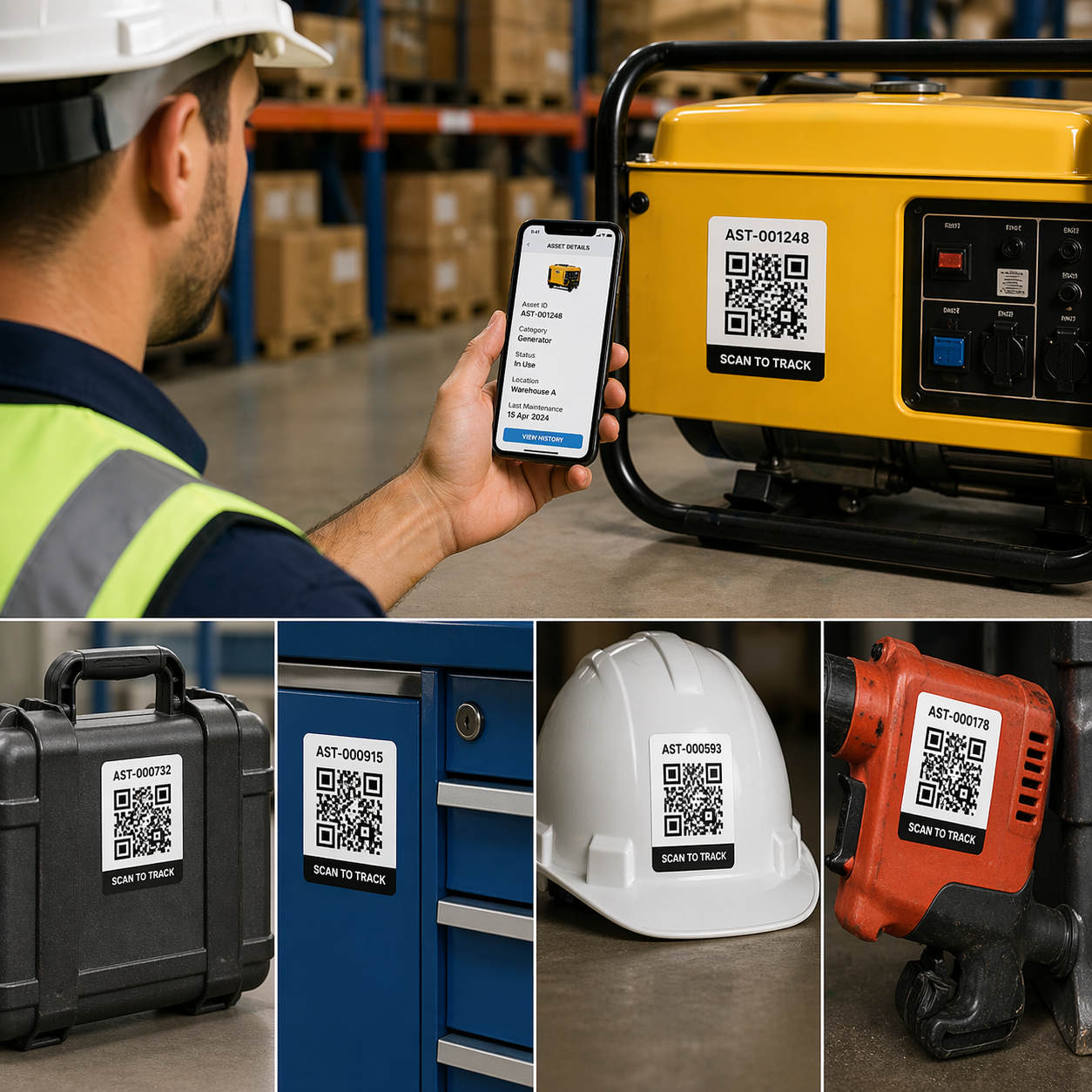
QR code asset management stickers help businesses identify assets faster, reduce manual errors, and keep records easier to update. Instead of relying on handwritten tags, spreadsheets, or inconsistent naming, a quick scan can open the right asset record and move the task forward immediately.
This guide explains the 9 main benefits of QR code asset management stickers for UK organisations managing equipment, stock, tools, facilities assets, and multi-site operations. It is especially relevant for businesses across London, Greater London, and the wider United Kingdom that want faster tracking, stronger visibility, and cleaner maintenance records.
💡 Short answer
The biggest benefit of QR code asset management stickers is that they connect physical assets to digital records instantly. That makes tracking faster because staff can scan instead of searching manually. It also improves maintenance, audits, stock checks, and day-to-day asset control because the right information is easier to access and update at the point of use.
Quick facts: what QR asset management stickers improve
- Faster identification: staff can scan the asset and reach the right record immediately.
- Better record accuracy: less manual typing means fewer avoidable data errors.
- Cleaner maintenance workflows: service logs and inspection records can be tied to the correct asset more consistently.
- Stronger visibility: assets are easier to find, check, verify, and audit across sites.
- More reliable control: durable labels help the system keep working in real environments.
9 benefits of QR code asset management stickers for faster tracking
1) Faster asset identification
The first and most obvious benefit is speed. A QR code asset management sticker gives each item a scannable route to its digital record, so staff do not have to type serial numbers, guess model references, or search through disconnected spreadsheets. In practical terms, a scan removes friction at the very start of the workflow.
This matters whether the asset is a tool, piece of equipment, mobile device, facilities component, or warehouse item. If you want a closely matched page focused on operational equipment use, see QR code tracking labels for equipment.
2) More accurate asset records
Faster tracking only matters if the information is trustworthy. QR code stickers improve accuracy because they reduce the need for manual data entry and make it easier to open the correct record every time. That lowers the risk of attaching updates, notes, or service actions to the wrong asset.
This is one reason businesses also use QR code asset identification labels for smarter asset tracking when they need a clearer identification layer behind maintenance, audits, and ownership control.
3) Easier maintenance tracking
Maintenance becomes easier when engineers, technicians, or operators can scan the asset and reach its service history immediately. A QR code asset management sticker can link directly to manuals, inspection forms, maintenance records, fault logs, or parts information.
Instead of looking up the asset first and then finding the maintenance file, the scan takes the user to the right place in one step. That reduces wasted time and supports cleaner service records.
4) Better stock and inventory visibility
Many businesses manage assets and stock side by side, so the line between asset management and inventory control is often practical rather than strict. QR codes help teams confirm what an item is, where it belongs, whether it is in use, and when it was last checked.
For organisations handling a mix of tracked equipment and stored items, QR code inventory tracking labels for smarter stock control are a strong companion page because they support location control, warehouse accuracy, and faster stock movement.
5) Stronger audit trails and compliance evidence
A good asset management system is not only about knowing what you own. It is also about proving what happened to it. QR code stickers help build a cleaner audit trail by making it easier to attach inspections, condition checks, maintenance events, and verification steps to the correct asset record.
This is especially valuable in facilities, healthcare, engineering, logistics, education, and other settings where asset visibility and traceability matter across teams or sites.
6) Quicker workflows across teams and sites
QR asset management stickers are particularly useful when assets move between departments, buildings, vans, sites, or external teams. A scannable label gives everyone a faster way to confirm identity and open the same source of record, which reduces delays and confusion.
A facilities manager in London, a technician in Croydon, and a warehouse team in the Midlands can all interact with the same asset using a shared scan point. That makes multi-site control much easier to standardise.
7) Less reliance on paper, memory, and manual workarounds
One of the most commercially useful benefits is the removal of weak tracking habits. When assets are not clearly labelled, teams often rely on memory, temporary notes, paper checklists, or local spreadsheets. These workarounds create delays, duplicate records, and missed updates.
QR code stickers give the business a more stable operational reference point. The scan becomes the shortcut to the correct record, which helps reduce inconsistency across day-to-day asset handling.
8) Better long-term label performance in real environments
A QR sticker only delivers value if it stays readable. That is why the material choice matters just as much as the data behind the code. Asset management labels often need to cope with abrasion, cleaning, moisture, handling, storage, and long-term use.
If durability is part of the decision, relevant supporting pages include durable QR code stickers, how to design QR asset tags that still scan years later, and facilities management QR code stickers.
9) A stronger foundation for smarter asset management
The final benefit is strategic. QR code asset management stickers do more than speed up a scan. They create a better operational foundation for maintenance, audits, lifecycle tracking, issue and return workflows, and broader asset visibility.
When each asset has a scannable identity, it becomes easier to build processes around it. That could mean faster room audits, better service records, clearer handovers, or a smoother route into digital systems. In short, the sticker becomes part of the operating model rather than just a printed label.
How QR code asset management stickers create commercial value
Businesses do not invest in asset labels because the technology looks modern. They invest because faster tracking reduces wasted time, record errors, lost assets, repeated checks, and avoidable maintenance friction. The scan is only the doorway. The commercial value comes from what the scan allows teams to do more quickly and more accurately afterwards.
- less time spent searching for the right asset record
- fewer mistakes during updates and inspections
- cleaner maintenance and audit evidence
- better visibility across sites and departments
- stronger control over tools, equipment, and operational assets
What most businesses get wrong about QR asset labels
The biggest mistakes are usually not about the QR code itself. They happen when the system behind the label is weak.
- Every asset links to the same generic page, which limits item-level usefulness.
- The label material is not matched to the environment, so the sticker degrades too quickly.
- The code is printed too small, making scanning harder than it should be.
- The label is placed badly, so it is difficult to find or scan during normal use.
- The post-scan action is unclear, so the code adds little operational value.
A good QR asset sticker project is a workflow decision, not just a print decision.
UK examples: where these benefits show up in practice
- London facilities teams: plant room and building assets can be scanned to open service history and compliance records during site visits.
- Greater London schools and colleges: IT, AV, and room-based assets become easier to audit and assign.
- Warehouse and logistics operations: mobile equipment, scanners, cages, and support assets can be verified faster during checks and handovers.
- Engineering businesses: tools, test devices, and workshop equipment can be tied to clearer maintenance and issue records.
- Healthcare and laboratory settings: controlled assets can be tracked with better service visibility and easier access to inspection history.
External reading that supports the asset management angle
For broader context on how 2D codes support digital access and traceability, GS1 UK explains QR codes powered by GS1 and shares implementation best practice. For maintenance workflow ideas, useful external reading includes how to use QR codes for equipment maintenance and how to track maintenance history with QR codes.
YouTube video example: asset and equipment maintenance with QR codes
This video fits the page well because it shows how QR labels can support real-world maintenance and asset workflows, including check-in, check-out, service records, and faster data access from the asset itself.
Quote: Simon King (Head of Sales)
“The strongest asset label systems do not just help you identify what something is. They help the next task happen faster, whether that is a check, a service visit, an audit, or a handover.”
— Simon King, Head of Sales
Conclusion: QR code asset management stickers make faster tracking commercially useful
The best reason to use QR code asset management stickers is not simply that they speed up scanning. It is that they make asset tracking more usable, more accurate, and easier to scale. A good sticker links the physical asset to the right digital record, reduces friction for the team, and improves the quality of the operational data behind the asset.
For UK businesses managing tools, equipment, stock, facilities assets, and multi-site operations, the benefits are practical. Faster identification, better maintenance records, cleaner audits, stronger visibility, and more dependable control all add up to a better asset management system.
When chosen and implemented properly, QR code asset management stickers become a useful operational control point rather than just another label.
FAQs
What are QR code asset management stickers used for?−
They are used to identify assets quickly and connect them to digital records such as maintenance logs, manuals, inspection forms, ownership details, and location history.
Why do QR code asset management stickers make tracking faster?+
They remove manual searching and data entry. A scan can open the correct record immediately, which saves time during audits, maintenance visits, stock checks, and daily operational tasks.
Can QR code asset stickers improve maintenance records?+
Yes. They can link directly to service history, manuals, checklists, and update forms, helping teams keep maintenance records cleaner and easier to retrieve.
Are QR asset management stickers suitable for harsh environments?+
Yes, provided the label material, adhesive, laminate, and print specification are matched to the environment. Many businesses need durable labels that stay readable through abrasion, moisture, cleaning, and repeated handling.
Which businesses benefit most from QR code asset management stickers?+
Manufacturers, facilities teams, logistics operators, schools, healthcare providers, warehouses, contractors, and other multi-site organisations often benefit most because QR labels improve asset visibility, scanning speed, and operational control.
Speak to Us Today
Need help choosing the right QR code asset management stickers for equipment, tools, facilities assets, warehouse items, or multi-site operations? Speak directly to Simon by calling 01403 801000.
Whether you need durable labels for tough environments, a clearer asset identification system, or a scannable setup that supports maintenance and audit workflows, we can help you specify the right label and print combination.