
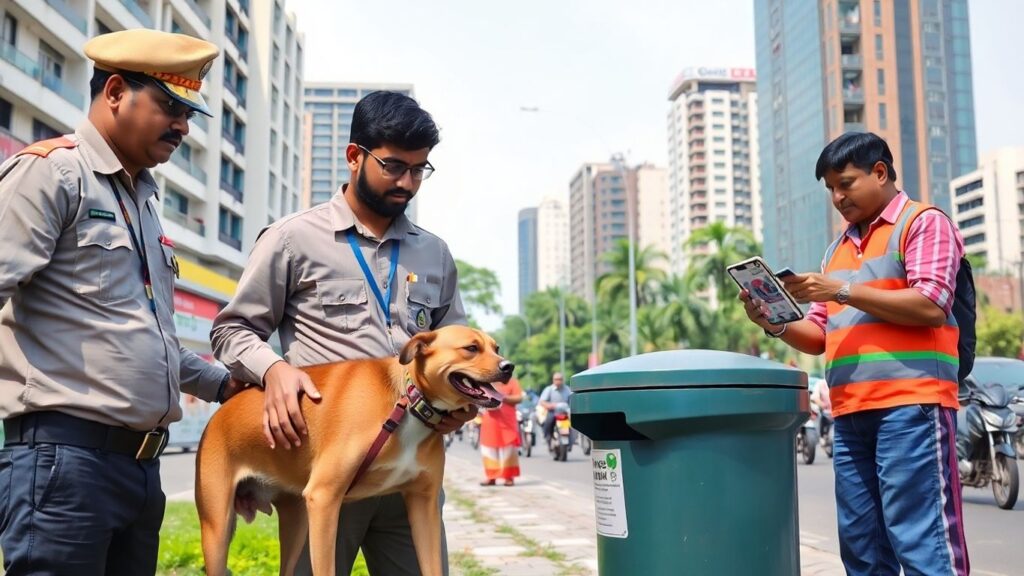
Indian cities are embracing technology to address pressing urban challenges, including stray dog management and illegal waste dumping. Municipal corporations in Shimla, Chennai, and Kerala are now using QR codes, GPS-enabled collars, and digital databases for more effective monitoring and public safety.
Key Takeaways
- Cities like Shimla and Chennai have launched digital tracking projects for stray dogs, using QR codes, GPS collars, and microchips.
- QR code technology also helps track down and penalize waste dumpers in Kerala.
- Efforts focus on improving citizen safety, reducing dog bites, enforcing vaccinations, and accountable waste disposal.
Tech-Driven Stray Dog Management In Shimla
Shimla Municipal Corporation initiated a comprehensive campaign targeting stray dog issues, introducing QR code collars and GPS tracking devices. These digital tags create a detailed, accessible profile for each animal, covering health status, sterilization history, and current location. Around 3,000 dogs are being vaccinated, sterilized, and recorded.
Special provisions are being made for aggressive animals, marked for specific intervention. The mayor highlighted that the campaign aims not only to curb rabies cases but also to produce India’s first fully digital stray dog census. The drive’s success is bolstered by participation from animal welfare groups and other cities, reflecting its pioneering approach.
Chennai’s Approach: Digital Profiles For Every Stray Dog
Chennai’s plan goes a step further with microchips implanted under the dogs’ skin, paired with reflective QR code collars. These measures prevent unauthorized relocation of dogs and improve data accuracy, as every captured, sterilized, or relocated animal leaves a digital trace.
The QR code provides instant access to a dog’s medical records, vaccination status, and territorial origin, aiding both officials and the public. Implementation of real-time databases is expected to help identify unvaccinated dogs, streamline sterilization, and reduce territorial aggression triggered by random relocations.
QR Technology Tackles Illegal Waste Dumping In Kerala
Kerala’s Thirumittacode panchayat demonstrated the potential of QR codes in another public issue—illegal waste dumping. By scanning QR-labeled packaging found in dumped refuse and combining this with nearby CCTV footage, local officials traced and fined the culprits. The quick resolution drew praise for its efficient blend of digital tracking and traditional investigation.
The Promise And Challenges Ahead
These smart surveillance initiatives represent a significant step towards more accountable urban management in India. QR codes and digital records allow for:
- Traceability of stray dog populations
- Improved public health via up-to-date vaccination and sterilization data
- Deterrence of both human and animal-related infractions
However, experts emphasize that technology alone cannot solve systemic issues. Sustained campaigns, public awareness, and adequate sterilization centers are also crucial for lasting change. With India’s cities increasingly turning to data-driven solutions, these early efforts spotlight both the transformational power—and necessary caution—in applying technology to complex social problems.
Sources
- ‘Track stray dogs behaviour with GPS collars, QR codes’: Shimla launches massive drive; move comes day after
SC’s major order | India News, Times of India. - Shimla stray dogs to get QR codes and GPS collars in first-of-its-kind drive, India Today.
- Woof! QR codes, microchips bring stray dogs under surveillance | Chennai News, Times of India.
- QR code, CCTV footage help Thirumittacode panchayat in Kerala track down waste dumpers, The New Indian Express.