
QR Code Stickers for Market Stalls and Pop-Up Shops: A Practical Guide
If you sell at market stalls, craft fairs, street markets, or pop-up shops, QR code stickers can do far more than take people to a homepage. Used properly, they make it easier for customers to pay, browse, follow, review, join, and buy again.
This practical UK guide explains how to use QR code stickers for market stalls and pop-up shops, what each type of QR setup is best for, when to use dynamic, sequential, or custom branded labels, and how traders across London, Greater London, and the wider United Kingdom can turn walk-up footfall into measurable action.
💡 Short answer
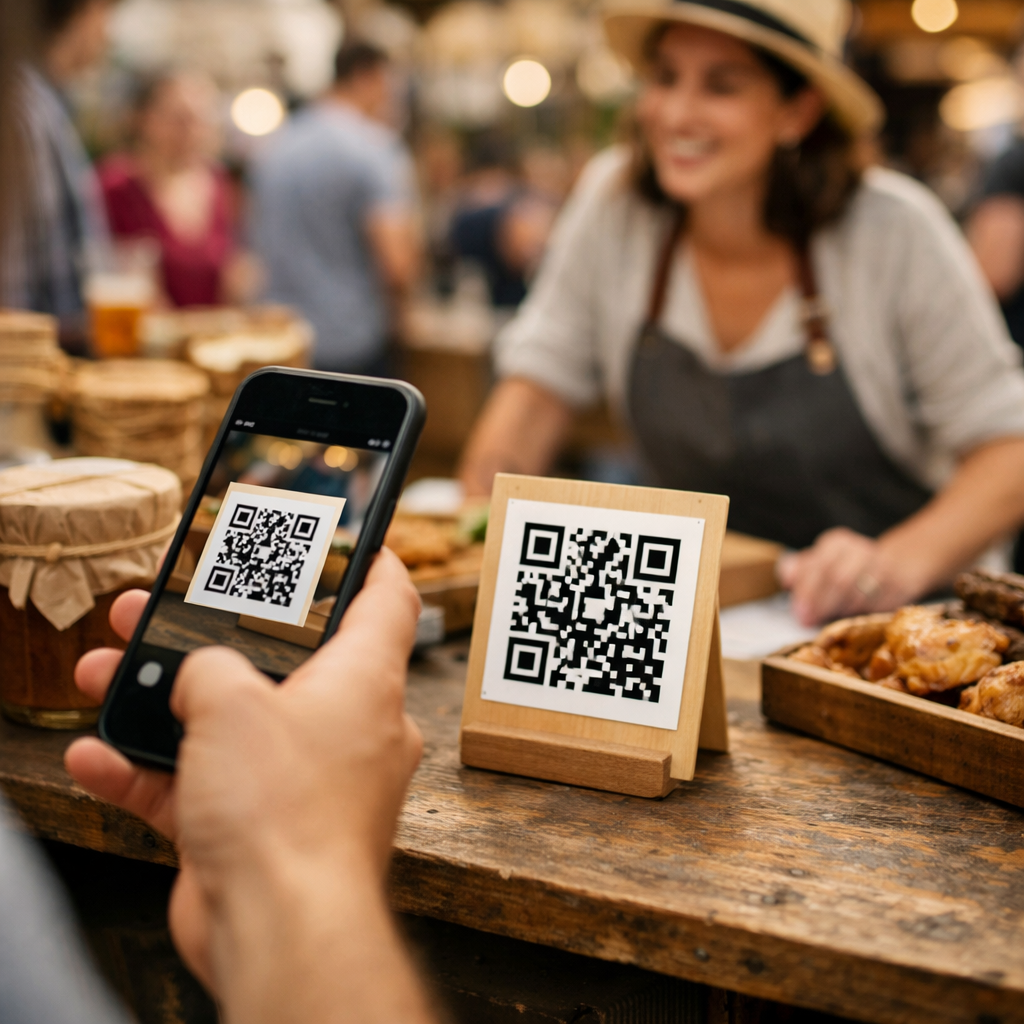
QR code stickers help market stalls and pop-up shops turn in-person attention into immediate action. A scan can open a payment link, product page, offer, review form, Instagram profile, email signup, or reorder page. When the sticker, destination, and placement are chosen properly, the stall becomes easier to shop from and easier to measure after the event.
Quick facts: QR codes for stalls and pop-ups
- The best QR codes reduce friction: they make one clear next step easy, such as paying, ordering, following, reviewing, or joining a mailing list.
- Dynamic QR codes are often the strongest fit: they let traders update the destination after printing, which matters when offers, venues, stock, or campaigns change.
- Custom branded QR stickers improve trust: clear design, strong contrast, and a relevant call to scan usually outperform generic labels.
- Weatherproof materials matter: outdoor markets, damp mornings, transport boxes, and repeated handling can quickly ruin a poor-quality label.
- The real value is after the event: scans can keep customers connected after they leave the stall, which is where repeat sales often happen.
Complete guide: using QR code stickers at market stalls and pop-up shops
1) What QR code stickers actually do at a stall
A QR code sticker gives people a fast route from physical browsing to digital action. At a busy stall, that matters because customers do not always want to stop for long explanations, queue for card handling, search for your brand later, or manually type a website.
The code becomes a shortcut. One scan can open a payment page, product catalogue, product-care instructions, social profile, newsletter form, booking page, event discount, or a landing page built specifically for that market day.
In practice, this means your stall can keep selling even when the customer has already walked away.
2) The most useful QR destinations for market traders
The strongest QR setup starts with the destination, not the sticker. For most market stalls and pop-up shops, the best-performing scan targets are:
- payment links: useful for quick checkout, deposits, or low-contact transactions
- product pages: ideal when the customer wants more detail than the stall signage can show
- Instagram or TikTok: helpful when the sale is likely to happen later and the brand needs to stay visible
- email signup pages: strong for launches, drops, market schedules, or future promotions
- review requests: good for building trust after a positive purchase experience
- catalogues and reorder pages: effective when buyers discover you in person but reorder online
- event-specific landing pages: useful when you want to track results by venue, day, or campaign
A QR code should not send people somewhere generic. It should send them somewhere that matches the exact reason they scanned.
3) Why dynamic QR codes are often best for pop-up shops
Dynamic QR code stickers are often the most practical option for traders who move between locations, change promotions, rotate stock, or want to test different customer journeys.
That is because a dynamic QR code points to a managed redirect rather than a fixed destination. You can change where the code leads without reprinting the sticker. That is useful when:
- today’s offer ends after the market
- one weekend is focused on email signup and the next is focused on direct sales
- different stalls or events need different destinations
- you want scan tracking by placement, sign, table, or event
- your product pages or stock links change regularly
For this route, see Dynamic QR Code Stickers, Variable QR Code Printing, and Custom QR Code Stickers.
4) When sequential QR codes make sense
Not every market use case is customer-facing. Sequentially numbered QR code stickers can be useful when a trader or event team needs an ordered system for stock tubs, pricing boards, display assets, order bags, or returnable equipment.
This is less about public marketing and more about keeping operations tidy. Sequential systems can help with:
- tracking stall kit and fixtures
- matching display stock to back-up stock
- organising setup and breakdown processes
- labelling repeat-use event equipment
- keeping manual inventory systems cleaner
If the goal is internal order rather than customer engagement, Sequentially Numbered QR Code Stickers are often the more practical fit.
5) The highest-value use cases for market stalls and pop-ups
Businesses rarely need just one QR code. They usually need a small system of scans that match different moments in the customer journey.
The highest-value use cases usually include:
- buy now: a code on the counter or sign for fast mobile payment
- browse later: a code on packaging or a thank-you card linking to the online shop
- follow the brand: a social QR on signage for people who are not ready to buy yet
- join the list: a sign-up QR linked to a discount, giveaway, or event update
- review the purchase: a post-sale QR on receipt cards or packaging
- learn more: product-story, care-guide, ingredient, or sizing information
- scan for offers: event-only landing pages for a market-specific promotion
This matters because market footfall is often mixed. Some buyers are ready now. Others need a lighter next step before they convert.
6) Where to place QR code stickers for the best scan rate
Placement matters as much as the code itself. Many poor QR campaigns fail because the code is technically correct but badly positioned.
At a stall or pop-up, the most effective placements are often:
- front-of-stall signage: for social follows, offers, or menus
- counter mats or payment stands: for fast checkout and tip or donation flows
- packaging and product labels: for reorder journeys and care information
- thank-you cards: for reviews, repeat purchases, and list growth
- display boards: for lookbooks, product variants, or pre-order catalogues
- staff-worn badges or lanyards: for quick contact or booking access in service-led pop-ups
The best setups also use a short instruction near the code, such as Scan to pay, Scan to shop later, or Scan for 10% off your next order. People scan more readily when the value is obvious.
7) Why sticker material matters in real market conditions
Markets and pop-ups are not gentle environments. Labels may be exposed to transport crates, folding tables, damp air, changing temperatures, sunlight, handling, rubbing, and repeated setup and pack-down.
That is why material choice matters. A QR code that smudges, curls, tears, or fades can quickly become unusable. For many traders, the better option is a more durable, weather-aware specification rather than a basic paper label.
For harder-wearing use cases, see Durable QR Code Stickers and Small Custom QR Code Stickers.
8) What most stall owners get wrong
The most common failures are usually simple:
- the code points to the homepage: which creates unnecessary friction
- there is no call to action: so customers do not know why they should scan
- the code is too small or badly printed: which hurts scan reliability
- the same code is used for every purpose: which makes results harder to understand
- the post-scan page is weak on mobile: which wastes the attention the code generated
- there is no follow-up logic: so the stall gets attention but not repeatable business value
A QR sticker is only effective when the whole journey is coherent, from placement to promise to landing page.
9) London and UK examples: how traders actually use them
These local examples show how the same QR tool can do different jobs depending on the stall model.
- Spitalfields jewellery trader: a display QR opens a catalogue of ring sizes, custom options, and an Instagram follow page for buyers who want to decide later.
- Borough Market food seller: a counter QR links to ingredient details, allergy guidance, and an email signup for weekly specials.
- Camden pop-up clothing brand: fitting-room signage uses a QR code to show out-of-stock sizes, colour options, and online checkout links.
- Notting Hill home-fragrance stall: a thank-you card QR drives post-purchase reviews and repeat orders from people who first discovered the brand in person.
- Southbank craft trader: a payment QR reduces queue friction during busy periods when card handling slows down service.
- Greater London event pop-up: dynamic QR stickers let the operator reuse the same branded signage across different venues while changing the destination by campaign.
The commercial pattern is consistent: one scan removes a small piece of friction, and those small reductions add up.
10) Advanced ways to use QR code stickers beyond basic scanning
Once the basics are working, QR codes can support more sophisticated event selling:
- event-by-event tracking: compare which market or pop-up generates the strongest scan behaviour
- A/B testing: test two different offers or calls to action on separate signs
- location-specific offers: use different destinations for London events, food markets, gifting fairs, or Christmas pop-ups
- product-family journeys: link different ranges to different collections or bundles
- post-purchase automation: send buyers to a page with care guides, review prompts, or reorder links
- brand-building journeys: prioritise follows and email capture when immediate purchase intent is low
This is where a stall stops being a one-day sales surface and becomes part of a longer customer-acquisition system.
11) External context: where smarter QR use is heading
Businesses are getting more comfortable with QR codes as everyday commercial tools, and standards-led 2D code development is moving the wider market toward richer, more flexible product and engagement experiences.
That does not mean every market trader needs a complex standards project. It does mean the direction of travel is clear: businesses want scannable codes that can connect the physical world to better digital journeys. For traders and pop-up operators, that makes a practical QR setup a sensible move now, especially where repeat purchases, product information, or flexible campaigns matter.
For external reading, see QR codes powered by GS1, implementation best practice, and QR comparison.
12) YouTube video example: using QR codes for a pop-up shop sign-up flow
This example is relevant because it focuses on using a QR code in a pop-up shop context to drive sign-ups and make offline footfall easier to capture for follow-up marketing.
13) Internal reading worth linking to
Internal resources worth linking to include Dynamic QR Code Stickers, Custom Branded QR Code Stickers, QR Code Marketing Stickers Printed in the UK, Custom QR Code Stickers, Variable QR Code Printing, Sequentially Numbered QR Code Stickers, Durable QR Code Stickers, and Small Custom QR Code Stickers.
14) Quote: Simon King (Head of Sales)
“The best market-stall QR codes do one thing clearly. They do not ask the customer to work out the next step. They make paying, following, reviewing, or buying again feel immediate and obvious.”
— Simon King, Head of Sales
Conclusion: QR code stickers help stalls and pop-ups convert attention into action
QR code stickers are effective for market stalls and pop-up shops because they shorten the gap between interest and action. They help customers pay faster, find product information, follow the brand, leave reviews, join a list, and return later to buy again.
For traders across London, Greater London, and the UK, the best setup is usually practical rather than complicated. Choose the right destination, use a clear call to scan, match the material to the environment, and make the post-scan journey mobile-friendly. Dynamic QR stickers are often the strongest option when the destination needs to change over time. Sequential stickers are more useful when the need is operational control.
The biggest gain is not the code itself. It is the reduced friction, better follow-up, and stronger repeat connection that happens after the scan.
FAQs
How do QR code stickers help at market stalls and pop-up shops?−
They help customers take fast action on the spot, whether that means paying, browsing products, following social channels, joining an email list, leaving a review, or ordering later after they have left the stall.
What should a QR code at a market stall link to?+
The best destination depends on the scan intent. Common options include payment links, product pages, social profiles, review requests, mailing-list forms, event offers, booking pages, or a dynamic landing page that can be changed later.
Are dynamic QR code stickers better for pop-up shops?+
Often yes. Dynamic QR codes are more flexible because the destination can be updated without reprinting. That makes them useful for changing offers, venues, stock pages, and campaign tracking.
Do QR code stickers need to be weatherproof for outdoor markets?+
In many cases, yes. Outdoor trading exposes labels to damp, friction, transport, sunlight, and repeated handling, so tougher materials are often the safer commercial choice.
Can QR code stickers help market traders get repeat sales?+
Yes. A QR code can link a first-time buyer to a reorder page, loyalty offer, email signup, product-care guide, or follow-up promotion, which is useful because many repeat purchases happen after the event rather than at the stall itself.
Speak to Us Today
Need help choosing the right dynamic, sequential, custom printed, or branded QR code sticker setup for your market stall or pop-up shop? Speak directly to Simon by calling 01403 801000.
You can also reach us via WhatsApp from the link in the site header, or use our AI-powered support chat in the bottom-right corner for instant answers.