
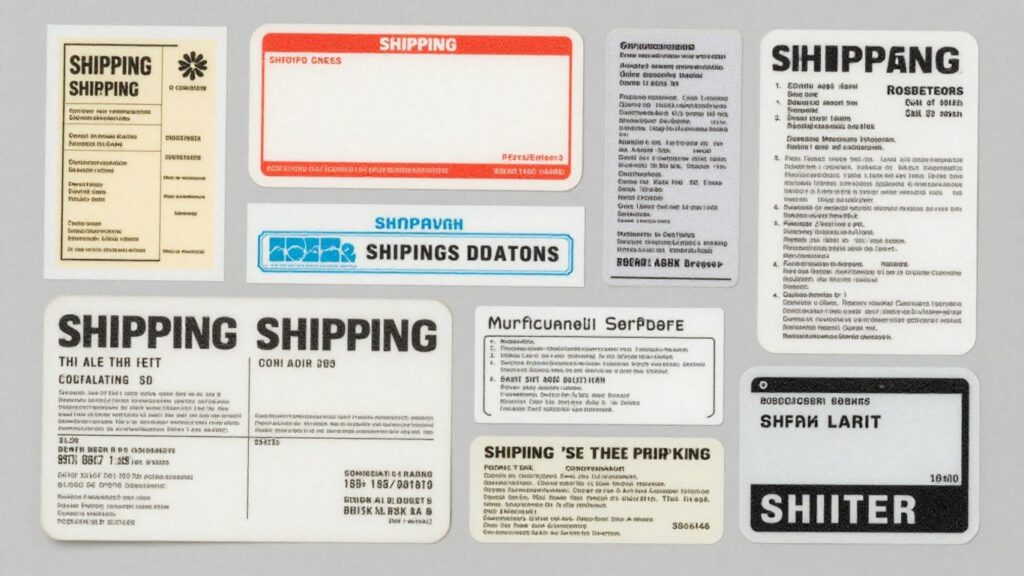
When you’re shipping items, the label is pretty important. It’s not just about where the package is going, but also making sure it gets there without any fuss. For UK businesses, getting the shipping label dimensions right is a big part of that. It affects everything from how much information you can fit on it to how easily it can be scanned by machines. Let’s have a look at why these dimensions matter and what you need to know.
Key Takeaways
- Standard shipping label dimensions are usually based on common parcel sizes and carrier requirements, with A6 (148 x 105 mm) and 100 x 150 mm being popular choices in the UK.
- The choice of label size should consider the amount of information needed, including addresses, barcodes, and any special instructions, while also ensuring clear readability for both humans and machines.
- Customising label dimensions might be necessary for unusual packaging shapes or when integrating with automated sorting systems, but always check carrier guidelines first.
- The material of the label can influence its durability and how well it adheres, which indirectly relates to its effective dimensions and scanability, especially in challenging environments.
- Ensuring scannability involves not just the size but also the quality of the print, the ‘quiet zone’ around the barcode, and testing the labels before full deployment.
Understanding Standard Shipping Label Dimensions
When you’re sending parcels out, getting the shipping label right is pretty important. It’s not just about making sure the address is clear; the size and layout play a big role in how smoothly everything moves through the postal system. For businesses in the UK, sticking to standard dimensions usually makes life a lot easier.
Common Label Sizes for UK Businesses
Most businesses find that a few standard sizes cover most of their needs. The most common one you’ll see is the 4×6 inch label. It’s a good size because it fits most standard shipping software and printers without any fuss. You can get all the necessary information on there, including barcodes and addresses, and it’s easy for scanners to read. Think about companies that send out a lot of individual items; they’ll often use these. Even for tracking assets within a warehouse, using something like a 4×6 inch label with a QR code sticker can make inventory checks much quicker.
Here are some typical sizes you’ll encounter:
- 4×6 inches (approx. 102×152 mm): The most popular choice for general shipping. It offers a good balance of space for information and compatibility with printers.
- A4 labels (210×297 mm): Often used when you need to print multiple labels on a single sheet or for larger packages where a smaller label might get lost or damaged.
- Smaller labels (e.g., 2×3 inches or 3×4 inches): These can be useful for smaller items or when you’re printing labels in bulk on a sheet, though they require careful layout to ensure everything is readable.
Factors Influencing Label Size Choice
While standards are great, what you’re shipping and how you’re shipping it can influence your choice. If you’re sending out small, lightweight items, a huge label might be overkill. On the other hand, if you’re shipping something large or need to include a lot of detail, you’ll want more space. For example, if you’re using QR code stickers to track equipment, the size of the equipment and the distance from which it will be scanned will dictate the label size. A small piece of equipment might only need a 20mm QR code sticker, while a large machine might benefit from a larger one for easier scanning.
The key is to find a size that accommodates all necessary information clearly without being so large that it wastes material or so small that it becomes difficult to read or scan.
Ensuring Readability with Standard Dimensions
No matter the size you choose, readability is paramount. This means ensuring there’s enough white space around the text and barcodes, often referred to as the ‘quiet zone’. This is especially important for QR codes. For instance, companies using QR code stickers for asset tracking in busy environments need to make sure the code is large enough and has a clear quiet zone so that handheld scanners or even smartphone cameras can pick it up quickly, even from a slight distance. Using durable, high-tack labels means they’ll stay put and remain scannable, even in tough conditions. If you’re sending items internationally, you might need to consider global shipping standards to avoid issues.
Customising Shipping Label Dimensions for Specific Needs
Sometimes, the standard shipping label sizes just don’t cut it. Maybe you’ve got an unusually shaped product, or perhaps you need to fit a lot of information onto a small space. That’s where customisation comes in. It’s not just about making a label fit; it’s about making it work best for your specific situation.
When Standard Sizes Aren't Enough
Standard label sizes are great for general use, but they can be limiting. If you’re shipping items that are long and thin, or perhaps very small and intricate, a standard rectangle might not be the most efficient or visually appealing choice. For instance, a small electronics company might need labels for individual components that are only a few centimetres wide. Trying to cram all the necessary information, like a serial number and a QR code sticker for digital instructions, onto a standard 100x150mm label could make it look cluttered and hard to read. In these cases, opting for custom dimensions, perhaps a narrower, longer label, makes much more sense. This allows for better organisation of text and codes, improving scannability and user experience. You can even get labels in specific shapes, like circles or squares, to better match your product’s form. Custom sizing options are available to ensure you get exactly what you need.
Tailoring Dimensions for Packaging
Your packaging is part of your brand, and your labels should complement it. If you’re using custom-shaped boxes or bags, standard rectangular labels might look out of place. Tailoring label dimensions means considering the surface area available and the overall aesthetic. For example, a luxury food producer might use small, square labels for their artisanal jars, placing a QR code sticker on the side that links to recipe suggestions. This feels more integrated and premium than a large, generic label slapped on the front. It’s about making the label a natural extension of the product and its packaging. Think about how the label will sit on the item – will it wrap around a corner? Does it need to be placed in a specific spot to be easily seen? Getting the dimensions right ensures the label serves its purpose without detracting from the product’s presentation. Selecting effective sizes for your packaging is key.
Optimising Size for Automated Systems
For businesses that use automated scanning or sorting systems, label dimensions are critical. These systems rely on consistent, predictable label placement and size for accurate reading. If your labels are too large, they might jam machinery. If they’re too small or oddly shaped, they might not be detected correctly. For example, a large distribution centre might use specialised labels on pallets or large containers. These labels often need to be a specific size to be read by overhead scanners from a distance. Even for smaller items, if you’re using QR code stickers for inventory management, ensuring the size is optimised for the scanners in your warehouse is vital. This might mean choosing a slightly larger label than you initially thought necessary to accommodate the required ‘quiet zone’ around the QR code, which is essential for reliable scanning. Testing with your specific equipment is always a good idea.
The Impact of Material on Shipping Label Dimensions
The material a shipping label is made from plays a surprisingly big role, not just in how long it lasts, but also in how well it scans and sticks. It’s not just about slapping a label on a box; the right material can make a real difference to your operations.
Durability and Size Considerations
Think about where your parcels are going. Are they being shipped across the UK, or are they heading for a rough journey overseas? For items that need to withstand a bit more, like those destined for industrial use or outdoor storage, you’ll want a more robust label. Materials like vinyl or PET are good choices here. They’re tougher than standard paper labels and can handle moisture and abrasion much better. This durability is key for things like asset tracking QR code stickers, where the label needs to stay readable for the lifetime of the equipment. For instance, a UK firm supplying machinery might use durable vinyl QR code stickers to link equipment to digital maintenance logs. These labels need to survive in workshops and on-site, so the material choice is as important as the size.
Adhesive Properties and Label Dimensions
It’s not just about the label itself, but how it sticks. Different surfaces require different adhesives. A standard adhesive might be fine for a clean cardboard box, but what about plastic containers, metal drums, or even fabrics? For these, you might need a high-tack adhesive that can grip securely. This is particularly relevant for businesses using QR code stickers for inventory management in warehouses. Imagine trying to label a dusty, textured pallet rack – a standard label would just peel off. High-tack labels, often made with strong acrylics, are designed to bond to challenging surfaces. The size of the label can also influence adhesive choice; larger labels might need a stronger, more uniform adhesive to prevent peeling at the edges.
Material Choices for Various Environments
Different environments demand different label materials. For example, if your products are going to be exposed to water, oil, or extreme temperatures, you’ll need specialised materials. Waterproof synthetic labels, often made from PET or vinyl, are a good option. Some companies use these for products that might get wet during transit or storage. For tracking assets in harsh conditions, like construction equipment or outdoor machinery, you might even look at metal plates with etched or printed QR codes. These are incredibly durable. A UK-based construction company, for example, might use these heavy-duty QR code stickers to track tools and equipment on-site, ensuring compliance and easy inventory checks. Even for standard shipping, if your goods are likely to be exposed to moisture, opting for a water-resistant material can prevent the label from smudging or falling off, ensuring your QR code stickers remain scannable.
| Material Type | Typical Use Case | Durability | Adhesive Options |
|---|---|---|---|
| Paper | Standard parcels, indoor use | Low | Standard, Removable |
| Vinyl | Outdoor use, asset tracking, harsh environments | High | Standard, High-Tack, Permanent |
| PET | Waterproof applications, chemical resistance | High | Standard, High-Tack |
| Metal Plates | Extreme environments, permanent asset ID | Very High | High-Tack, Mechanical Fixing |
Choosing the right material means your label will last as long as you need it to, and crucially, it will continue to scan correctly, no matter what it goes through.
Ensuring Scanability with Shipping Label Dimensions
Getting your shipping labels to scan reliably is more than just a convenience; it’s a necessity for smooth operations. A label that doesn’t scan can cause delays, lead to errors, and frustrate both your team and your customers. The dimensions of your label play a significant role in this, but so do other factors like the clarity of the printed information and the quality of the materials used. Think about how many times you’ve seen a QR code sticker on a product or piece of equipment. These aren’t just decorative; they’re functional tools. For instance, many UK organisations use durable, high-tack QR code stickers to track assets, prove compliance, or link equipment to digital instructions. The size and placement of these codes are carefully considered to ensure they can be scanned quickly and accurately, even in busy environments.
The Role of Quiet Zones and Module Size
When we talk about scanability, two key terms often come up: ‘quiet zone’ and ‘module size’. The quiet zone is essentially a clear, unprinted border around the barcode or QR code. This space is vital because it helps scanning devices distinguish the code from its surroundings. Without an adequate quiet zone, scanners can struggle to read the data, leading to failed scans. The size of the quiet zone is usually a percentage of the code’s overall size, and it’s a standard requirement for most barcode symbologies.
Module size refers to the smallest individual square or element within the QR code. A larger module size generally makes the code easier to scan, especially from a distance or in less-than-ideal lighting conditions. However, increasing the module size means you can fit less data into the same physical space. This is where careful planning comes in. For example, if you’re using QR code stickers to link to detailed product manuals, you’ll need to balance the amount of data with the module size to ensure it remains scannable on your chosen label dimensions.
Balancing Data Density and Label Size
Finding the right balance between how much information you need to put on a label and the physical size of that label is a constant challenge. A label that’s too small might force you to use a very dense QR code, where the individual modules are tiny. This can make it difficult for scanners to read accurately, particularly if the label gets scuffed or the print quality isn’t perfect. On the other hand, a label that’s excessively large might be wasteful and impractical for certain types of packaging.
Consider how UK businesses use QR code stickers for inventory management. They might need to encode a product SKU, a batch number, and a URL. If the URL is very long, it will increase the data density of the QR code. To maintain scanability, you might need to increase the label size or use a dynamic QR code solution. Dynamic QR codes, like those powered by Xcan.it, allow you to link to a short URL that then redirects to your longer destination. This keeps the QR code itself simpler and more scannable, even when the final destination link is complex.
| Data Element | Example Information | Impact on Density |
|---|---|---|
| Product SKU | ABC-12345 | Low |
| Batch Number | BATCH-XYZ-01 | Low |
| URL | https://www.example.co.uk/product/very-long-description | High |
Testing and Proofing for Optimal Scans
Before you commit to a large print run, it’s absolutely vital to test your labels. This isn’t just about checking if the print looks good; it’s about verifying that the codes scan reliably. Many suppliers offer digital proofs, which are essentially mock-ups of your label that you can test with your own scanning devices. This is a critical step, especially if you’re using custom dimensions or incorporating logos and brand colours into your QR code stickers.
For example, a UK-based company might be using QR code stickers on their equipment for maintenance logs. They’d want to ensure that a technician, perhaps in a dimly lit workshop, can scan the code quickly using their mobile device. Testing the proof under various lighting conditions and with different devices can highlight potential issues before they become a problem on the factory floor.
The goal is to create labels that are not only informative but also highly functional. This means paying attention to the details of the barcode or QR code itself, such as the quiet zone, module size, and contrast, alongside the overall label dimensions and material. A well-designed, scannable label contributes significantly to operational efficiency and a positive customer experience.
Many businesses find that using durable, high-tack labels, perhaps made from vinyl, is a good investment for critical tracking applications. These materials hold up better to wear and tear, and the high-tack adhesive ensures they stay put, even on challenging surfaces. This durability is especially important for assets that are frequently handled or exposed to different environments. For instance, a company tracking tools used on construction sites would need labels that can withstand dust, moisture, and rough handling, and the QR code on that label must remain perfectly scannable throughout its lifespan. Sending a parcel requires precision, and ensuring your labels scan is a key part of that precision.
Navigating International Shipping Label Requirements
Sending parcels outside the UK means you need to get your labels just right. It’s not just about the address; there are international rules and customs to think about. Getting this wrong can cause delays, or worse, your package might get sent back.
Global Standards and Variations
Different countries have their own specific requirements for shipping labels. While many use similar formats, some might need extra information or have restrictions on what can be included. For instance, the European Union has specific rules about customs declarations. It’s a good idea to check the destination country’s import regulations before you send anything. Many UK businesses use QR code stickers on their outgoing international shipments. These can link to product information, warranty details, or even customs documentation, making it easier for the recipient to access necessary information. Companies like those providing asset tracking solutions often use durable, high-tack QR code stickers that can withstand varied environments, proving useful for tracking items globally.
Customs Documentation and Label Information
International shipments almost always require customs documentation. This usually includes a commercial invoice or a specific customs form, like the CN22 or CN23 for postal services. These forms detail the contents, value, and origin of the goods. Some carriers, like DHL, have their own specific label formats that integrate this information. For example, a UK business sending goods to the US will need to declare the item’s value and purpose. Failure to provide accurate customs information is a common reason for delays. Many businesses are now using QR code stickers on their packaging that link directly to detailed product specifications or compliance certificates, streamlining the customs process. This is particularly helpful for businesses that ship a wide range of products internationally.
Choosing Reliable Shipping Partners
Selecting the right shipping partner is key to smooth international deliveries. Look for companies with a strong global network and a good track record for handling international freight. They should be able to provide clear guidance on labelling requirements and customs procedures for your destination countries. Services like DHL, often used by UK businesses for international shipments, offer door-to-door tracking and handle much of the customs paperwork. For example, when shipping items like custom-made QR code stickers, using a reliable partner ensures they arrive safely and on time. Many businesses find that using a partner who can print custom shipping labels that include tracking information or links to digital documentation simplifies the entire process.
Practical Considerations for UK Businesses
Sourcing High-Quality Shipping Labels
When you’re looking for shipping labels, it’s not just about the size. Think about the material too. For items that might get a bit bashed about or exposed to the elements, you’ll want something tough. High-tack labels are great for sticking firmly, even on slightly uneven surfaces, which is handy for warehouse environments. For instance, many UK businesses use durable, high-tack QR code stickers to track assets like machinery or IT equipment. These stickers can link directly to digital maintenance logs or compliance documents, proving they’ve met standards. It’s about making sure the label stays put and the information it carries remains readable, no matter what.
Cost-Effectiveness of Label Dimensions
Choosing the right label size can actually save you money. While it might seem like a small detail, using a standard size, like the common 4 x 6 inches [7c15], often means better pricing from suppliers because they’re produced in larger batches. If you’re sending out a lot of parcels, this can add up. However, if your needs are specific, like needing small QR code stickers to label individual components within a larger shipment, custom sizes might be more efficient. It’s a balance between bulk buying power and the specific information you need to convey. For example, a company tracking tools might use small, durable QR code stickers on each item, linking to its service history. This avoids printing lengthy serial numbers directly on the item and ensures easy scanning.
Expert Advice for Your Shipping Needs
Sometimes, you just need a bit of guidance. If you’re unsure about the best label size, material, or even how to integrate something like QR code stickers for asset tracking or linking to digital instructions, don’t hesitate to ask. Many UK suppliers offer direct support. They can help you figure out what works best for your specific packaging and scanning needs. For example, a business needing to track compliance for fire doors might use specialised QR code stickers that are tamper-evident and designed for easy scanning during inspections. Getting advice upfront can prevent costly mistakes down the line and ensure your labels are both functional and cost-effective. It’s always worth talking to a specialist who understands the nuances of label printing and application for UK businesses.
Wrapping Up: Getting Your Shipping Labels Right
So, we’ve gone through the ins and outs of shipping label dimensions. It might seem like a small detail, but getting it right really does make a difference for your UK business. From making sure your parcels get where they need to go without a hitch, to keeping your customers happy with clear, professional-looking packages, it all adds up. Don’t stress too much about it though; with a bit of attention and the right tools, you’ll be printing labels like a pro in no time. Just remember to check the requirements for your chosen couriers and stick to the standards. It’s all about making the process smoother for everyone involved.
Frequently Asked Questions
What is the standard size for shipping labels in the UK?
Most UK businesses use shipping labels that are 4 x 6 inches (about 100 x 150 mm) as this size fits well on parcels and is easy to read by both people and machines. This is the same size used by many courier companies, making it a safe choice for most needs.
Can I order custom-sized shipping labels for unusual packages?
Yes, you can order labels in almost any size to fit your packaging. Custom sizes are helpful for odd-shaped parcels or when you need extra space for information, barcodes, or QR codes. Just let your supplier know your needs, and they can guide you on the best fit.
How do I make sure my shipping label is easy to scan?
To get the best scan results, use clear printing, leave enough blank space (quiet zones) around barcodes and QR codes, and make sure the label isn’t too small or crowded. Always test a sample label with your scanner before printing a large batch.
Which materials are best for durable shipping labels?
If you need your labels to last or face tough conditions, pick vinyl or polyester labels with strong adhesive. These materials resist water, tearing, and fading. For normal parcels, paper labels work fine, but for outdoor use or asset tracking, tough materials are better.
Do I need to change label sizes for international shipping?
Some countries have special rules for label size or layout. Check with your courier or supplier before sending parcels abroad. Many UK-made QR code stickers and shipping labels can be made to meet international standards, so you can ship confidently anywhere.
Can I get help choosing the right shipping label for my business?
Absolutely! Many UK suppliers, like QR Code Stickers, offer expert advice on sizes, materials, and printing. You can call them directly to discuss your project, get a digital proof, and make sure your labels will scan and last as needed.