

Right then, let’s talk about price labels. If you’re running a shop in the UK, getting these right is pretty important. It’s not just about slapping a price on something; there are rules, and customers expect things to be clear. This guide is all about making sure your price label format is spot on, from what needs to be on it to how it looks. We’ll cover the basics, the legal bits, and even how technology can help. Making sure your price label format is easy to understand stops confusion and keeps things running smoothly.
Key Takeaways
- The price label format needs to clearly show the final price, including VAT, and any unit price if applicable. This helps customers compare products easily.
- You must follow the Price Marking Order regulations. This means showing prices clearly and avoiding anything that could mislead shoppers.
- Good design matters. Use readable fonts and durable materials for your price labels so they last and are easy to see, even in busy shops.
- Electronic Shelf Labels (ESLs) can be a game-changer for updating prices quickly and accurately, especially for promotions.
- Think about the whole process, from choosing cost-effective label solutions to how they integrate with your stock systems. Getting the price label format right saves time and hassle.
Understanding the Price Label Format
Key Elements of a Price Label Format
Getting the price label right is more than just sticking a number on a product. It’s about clear communication with your customers and meeting legal requirements. A well-designed price label format includes several key components that work together to inform and guide shoppers. Think of it as a mini-advertisement and an information hub all rolled into one. The goal is to make it easy for customers to understand what they’re buying and how much it costs, without any confusion.
Here are the main things to consider:
- Product Identification: How do you identify the item? This could be a product name, a SKU, or even a barcode. It needs to be clear so customers know they’re looking at the right thing.
- Pricing Information: The actual price, obviously. This should be prominent and easy to read. Sometimes, you’ll see a ‘was’ price alongside the ‘now’ price for promotions.
- Unit Pricing: For items sold by weight or volume, this is a legal requirement. It shows the price per kilogram, litre, or metre, making it easier to compare different sizes of the same product. For example, showing the price per 100g for cheese.
- Promotional Markings: If there’s a special offer, like ‘2 for £5’ or ‘Save 10%’, this needs to be clearly marked.
Many businesses are now using QR code stickers to link physical products to digital information. For instance, a retailer might use durable, high-tack QR code stickers on shelves to link directly to online product details or even stock levels. This adds another layer of information without cluttering the physical label. Some companies even use these QR codes to track assets, proving compliance or linking equipment to digital instructions, which can be incredibly useful for inventory management.
The effectiveness of a price label hinges on its clarity and accuracy. Any ambiguity can lead to customer frustration and potential regulatory issues. It’s a small detail that has a big impact on the shopping experience.
Regulatory Requirements for Price Labels
In the UK, there are specific rules about how you must display prices. These aren’t just suggestions; they’re legal obligations designed to protect consumers. The main piece of legislation to be aware of is the Price Marking Order 2004. This order dictates what information needs to be shown and how it should be presented. For example, if you’re selling goods in a shop, the price must be clearly visible to the customer before they decide to buy. This applies to both the product itself and, in many cases, the shelf where it’s displayed.
Key requirements include:
- Clarity: Prices must be unambiguous and easy to understand. No hidden charges or confusing abbreviations.
- Prominence: The price should be the most noticeable thing on the label or shelf. It shouldn’t be hidden behind other information.
- Accuracy: The price displayed must be the price the customer actually pays. You can’t advertise one price and charge another at the till.
- Unit Pricing: As mentioned, for goods sold by weight, volume, or measure, the price per unit must be displayed. This is a legal requirement for most food and some non-food items.
For food and beverage products sold within the European Union, there are also specific information requirements to ensure consumers can make informed purchasing decisions [5891]. While the UK has left the EU, many of these principles of clear consumer information remain relevant. Retailers moving products from Great Britain to Northern Ireland, for example, may have specific labelling needs [24b7].
It’s also worth noting that QR code stickers can play a role in compliance. For example, durable QR code stickers can be used to link equipment to digital maintenance logs or safety certificates, providing an easily accessible record for inspectors. This helps demonstrate that all regulatory requirements are being met.
Best Practices for Clear Price Labeling
Beyond the legal minimums, there are several best practices that can make your price labels even more effective. The aim is to make the shopping experience as smooth and transparent as possible for your customers. This not only builds trust but can also lead to increased sales.
Here are some tips:
- Keep it Simple: Avoid jargon or overly technical terms. Use plain language that everyone can understand. The price should be the hero of the label.
- Use Clear Fonts: Choose a legible font and ensure the text size is large enough to be read from a reasonable distance. Avoid overly decorative or small fonts.
- Consistent Formatting: Use a consistent layout for all your price labels. This helps customers quickly find the information they need across different products.
- Highlight Promotions: If you have a sale on, make sure the promotional price is clearly distinguished from the original price. Using a different colour or a larger font for the sale price can work well.
Consider how you can integrate technology. For instance, using high-tack QR code stickers on shelves can link customers to more detailed product information online, or even to reviews. This can be particularly useful for complex products or for providing additional context about sustainability or sourcing. Some businesses use these QR codes to track assets, proving compliance or linking equipment to digital instructions, which can be a smart way to manage inventory and provide extra value.
A customer who can easily understand pricing and promotions is more likely to make a purchase. Clear labeling builds confidence and reduces the chances of a customer walking away due to confusion or uncertainty.
Essential Components of Your Price Label Format
Getting your price label format right isn’t just about sticking a number on a shelf. Every element on the label plays a part in giving shoppers clear information and keeping you compliant. Increasingly, UK retailers are also adding QR code stickers to their labels, making asset tracking, compliance, and customer engagement much smoother.
Product Identification
The label needs to help both customers and staff quickly identify the item.
- Product name and brand—clear and legible, avoids mix-ups.
- SKU or barcode—a must for inventory systems and fast checkout.
- Many UK shops now use QR code stickers next to product IDs. These codes can pull up digital manuals, safety data, or full product specs instantly. For example, major hardware chains attach QR labels on tools, letting colleagues check recall status or maintenance dates on their mobiles.
Modern QR stickers aren’t just for scanning at checkout – they offer unique serialisation, allowing each product or asset to be tracked from back office through to the shop floor.
Pricing Information
Arguably the star of the show, this part must be transparent and accurate. Retailers often include:
- Clear price per item (in £/pence)
- Previous price, if there’s a promotion
- Any discount, savings, or multi-buy offers
- Some supermarkets add QR codes that link to price comparison or origin details for shoppers who want to check value on the spot.
| Label Field | Example |
|---|---|
| Product Name | Organic Apples |
| SKU/Barcode | 400012345 |
| Price | £1.20 per pack |
| Promo QR Code | Links to savings app |
Unit Pricing and Comparisons
For customer transparency and compliance, labels need unit prices (e.g., per 100g or per item). This helps shoppers compare brands and sizes easily.
- Always use the correct legal unit (litres, kilograms, single item, etc.)
- For multipacks or weighted goods, show both unit and total price
- In growing numbers of UK supermarkets and chemists, QR stickers link to live nutritional data or price per 100g tables to help with buying decisions
Promotional Markings
Special offers, temporary discounts, or bundled deals all require clear markings. Here’s what helps most:
- Eye-catching design: but never at the cost of clarity
- Expiry dates for offers, shown on the label or at the code destination
- QR code stickers: These increasingly appear on ‘multi-buy’ labels, linking customers to T&Cs, digital coupons, or manufacturer promos. It’s a handy way to transfer more info without cluttering small price tags—for instance, a convenience chain used QR code stickers to prove alcohol age-verification compliance, tying point-of-sale offers directly to a digital approval log.
- High-strength, durable QR labels are a must for on-shelf use, whether in chilly fridge aisles or exposed outdoor garden sections.
In summary: Whether you run a local corner shop or a national retail chain, getting these core elements right – plus embracing QR sticker options for extra data and compliance – keeps the price label format clear, practical, and future-proof. UK-made, high-tack labels are robust enough for most retail setups, and digital proofs make sure your QR codes scan first time, every time.
Ensuring Compliance with Price Label Regulations
Keeping your pricing clear and accurate isn’t just good practice; it’s a legal requirement. In the UK, several regulations are in place to protect consumers and ensure they know exactly what they’re paying for. The main piece of legislation to be aware of is the Price Marking Order 2004, which sets out the rules for how prices should be displayed for goods. Getting this wrong can lead to confusion, customer complaints, and even fines.
The Price Marking Order
The Price Marking Order 2004 is quite specific about what needs to be displayed and how. For most goods sold to the public, the price must be clearly visible and legible. This usually means the price per unit of quantity (like per kilogram or litre) needs to be shown alongside the selling price, especially for goods sold by weight, volume, or measure. This helps customers compare products easily. For example, when selling loose fruit, you’d need to show the price per kilogram, not just the price for a single apple.
- Selling Price: The final price the customer pays.
- Unit Price: The price per standard unit of measurement (e.g., per kg, per litre, per metre).
- Clarity: Information must be easy to see and understand, without ambiguity.
Think about how you display prices for items like fabric or electrical cable. You’ll need to show the price per metre. For food items sold by weight, the price per kilogram is usually mandatory. Even for pre-packaged goods, if the quantity isn’t obvious, unit pricing is often required. It’s worth noting that there are some exemptions, such as for goods sold in a single unit or where the unit price would be confusing, but it’s best to assume it’s needed unless you’re sure.
Consumer Rights and Clear Pricing
Consumers have a right to accurate pricing information. When you display a price, you’re essentially making an offer to sell at that price. If a customer accepts this offer (by taking the item to the till), you are legally bound to sell it at the displayed price. This is why it’s so important to have robust systems in place to avoid errors. Using durable labels, perhaps with QR codes linking to your inventory system, can help ensure the price displayed matches what’s in your system. For instance, some retailers use QR code stickers on shelves that, when scanned by staff, confirm the correct price and stock level, helping to prevent discrepancies. This also aids in tracking assets and proving compliance with pricing regulations.
Accurate pricing builds trust. When customers feel they’re being treated fairly and transparently, they’re more likely to return. Investing in clear, compliant labeling is an investment in your customer relationships.
Avoiding Misleading Price Information
Beyond just the price itself, the way it’s presented matters. You must not mislead consumers. This includes:
- Bait Advertising: Advertising a product at a low price to attract customers, only to find it’s out of stock or unavailable when they arrive.
- Misleading Comparisons: If you show a ‘was’ price, it must be genuine and reflect the price at which the item was sold for a reasonable period beforehand.
- Hidden Costs: All mandatory charges should be included in the displayed price. Any additional costs, like service charges, must be clearly stated separately.
For promotions, it’s vital to be precise. If you’re offering a ‘buy one, get one free’ deal, make sure the terms are obvious. Using clear, well-designed promotional markings on your labels, perhaps with a QR code linking to the full terms and conditions, can be very effective. Companies often use high-tack QR code stickers for promotional displays that need to withstand frequent handling and varying environmental conditions, ensuring the information remains legible and accessible. This approach helps maintain compliance while driving sales. You can find more information on consumer rights regarding pricing on the Citizens Advice website.
Designing an Effective Price Label Format
When it comes to price labels, the design isn’t just about looking good; it’s about making sure the information is clear, accurate, and easy for your customers to understand. A well-designed label can prevent confusion, reduce customer service queries, and even boost sales by highlighting promotions effectively. Think about how many times you’ve picked up a product and had to squint at a tiny price or hunt for the unit cost. We want to avoid that for your customers.
Readability and Font Choices
This is probably the most important part. If people can’t read the price, what’s the point? You need fonts that are clear and legible, even from a slight distance or in varied lighting conditions, like those found in a busy supermarket. Sans-serif fonts are generally a good bet for price labels because they’re clean and easy to read. Think about fonts like Arial, Helvetica, or Verdana. Avoid overly decorative or script fonts that can be hard to decipher quickly. The size of the font matters too. There’s a balance to strike – big enough to read easily, but not so large that it overwhelms the label or prevents you from including other necessary information, like unit pricing.
- Font Style: Opt for sans-serif fonts for maximum clarity.
- Font Size: Ensure text is legible at typical viewing distances.
- Contrast: Use high contrast between text and background (e.g., black on white, white on dark blue).
Even with standard price labels, incorporating QR code stickers can be a smart move. For instance, a retailer might use durable, high-tack QR code stickers on product packaging that link directly to detailed product information, user manuals, or even current promotions. This adds a layer of engagement without cluttering the primary price information.
Material and Durability Considerations
Your price labels need to withstand the environment they’ll be in. Think about a busy shop floor: labels can get bumped, brushed against, or even splashed. Using the right materials means your price information stays put and remains legible. For general use, standard paper labels might be fine, but for products that are handled frequently, stored in chilled environments, or exposed to moisture, you’ll want something more robust. Vinyl or polyester labels, for example, offer much better durability and resistance to wear and tear. Some businesses even use high-tack labels to ensure they stay firmly attached to challenging surfaces, like plastic packaging or metal shelving.
Consider using QR code stickers made from durable, high-tack materials. Many UK organisations use these for asset tracking or to link equipment to digital maintenance logs. A food retailer, for example, might use these on their own-brand products to link to allergen information or cooking instructions, proving compliance and offering customers more detail.
Integration with Inventory Systems
This is where things get really efficient. If your price labels can be generated directly from your inventory management system, it saves a huge amount of time and drastically reduces the chance of errors. Imagine a scenario where a price change is made in your system, and then new, correctly priced labels can be printed or generated almost instantly. This avoids the old problem of outdated prices lingering on shelves. Many modern inventory systems can output label data in formats that are easy to use for printing.
Think about how QR code stickers can integrate here too. For example, a retailer could use QR code stickers with unique IDs for each item in their inventory. Scanning these codes could instantly pull up stock levels, pricing, and even location within the store or warehouse, all linked back to your central inventory system. This is particularly useful for tracking assets or managing stock in large retail spaces. Companies are using these durable, high-tack labels to track everything from tools to high-value electronics, proving compliance and linking equipment to digital instructions.
The goal is to make the price label a tool for clarity and efficiency, not a source of frustration for either the customer or the staff managing them. Every element, from the font choice to the material, should serve the purpose of clear communication and durability.
The Role of Technology in Price Labeling
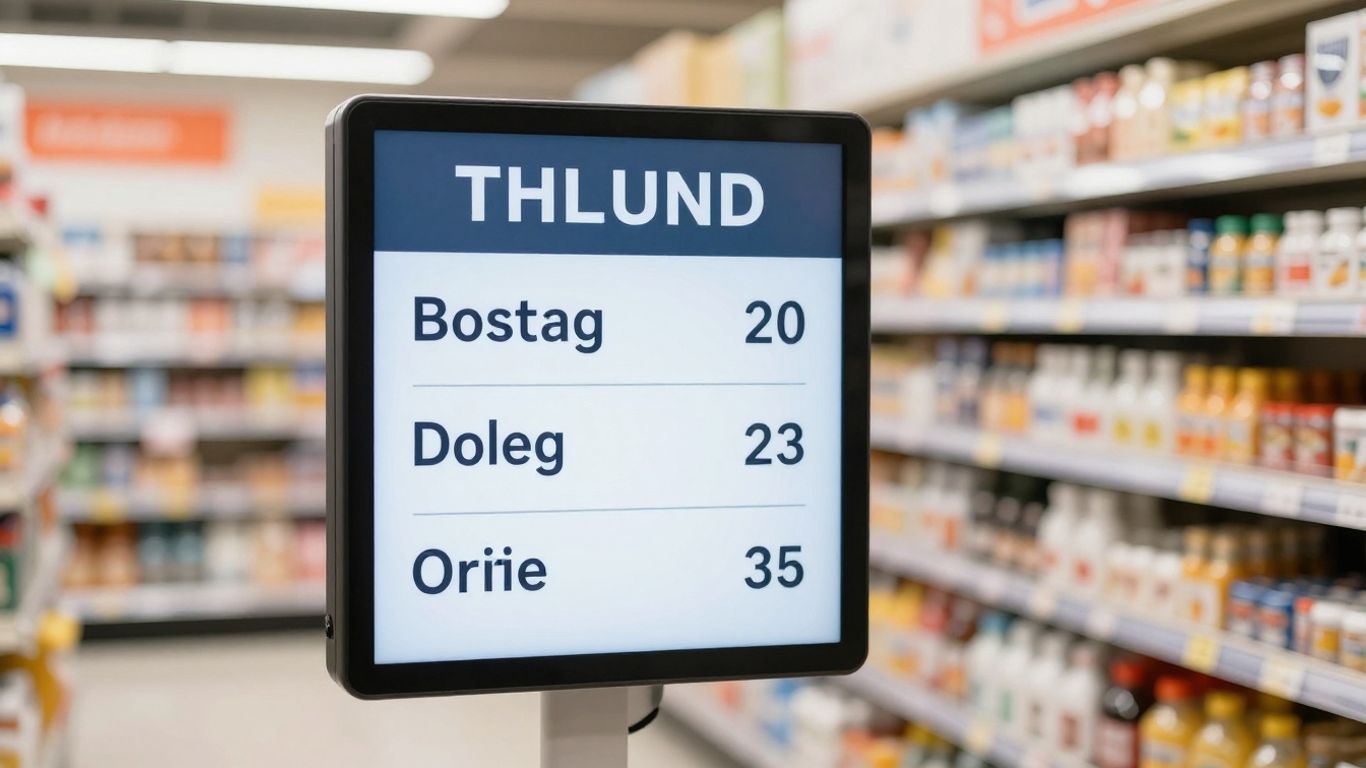
Technology is changing how we do things in retail, and price labels are no exception. While traditional printed labels have served us well, there’s a growing shift towards more dynamic and integrated solutions. This isn’t just about making things look modern; it’s about efficiency, accuracy, and giving customers better information.
Electronic Shelf Labels (ESLs)
Electronic Shelf Labels, or ESLs, are becoming more common. These are digital displays that sit on the shelf edge, showing prices and other product information. They can be updated instantly from a central system. This means if you have a sale or need to change a price, you don’t have to go around changing every single label by hand. Think about a large supermarket with thousands of products – the time and labour saved can be significant. Companies like Displaydata offer these systems, aiming to cut costs and improve the shopping experience. While not a direct replacement for all price labels, they are a powerful tool for high-turnover items or areas where prices change frequently.
Dynamic Pricing and Updates
This is where things get really interesting. Dynamic pricing allows retailers to adjust prices based on various factors, like demand, competitor pricing, or even time of day. ESLs make this possible in a physical store. But technology also offers ways to update information on traditional labels, or even replace them. For instance, QR codes are increasingly being used. Tesco has been trialling QR codes to replace traditional barcodes on some products. This allows for much richer information to be linked, such as detailed sourcing, allergen information, or even recycling guidance. The ability to update information linked to a QR code, even after it’s printed, is a game-changer. This is often achieved through dynamic QR codes, where the code itself doesn’t change, but the destination it links to can be updated remotely. This means a single QR code sticker could link to different promotions or compliance documents over time, without needing to reprint the label.
Data Management and Accuracy
Technology brings a new level of data management to pricing and product information. When you can update prices instantly, or link to detailed product information via a QR code, the potential for errors decreases. Manual price changes are prone to mistakes, leading to customer complaints and lost revenue. With electronic systems or well-managed QR code strategies, the data is centralised and controlled. For example, using durable, high-tack labels with QR codes for asset tracking in a warehouse means each item has a unique, scannable ID. This helps maintain accurate inventory records. Companies in the UK are using QR code stickers to track assets, prove compliance, or link equipment to digital instructions, showing how versatile this technology is. This focus on data accuracy extends to regulatory compliance, ensuring that the price displayed is always the correct one.
| Technology Type | Key Benefit | Example Use Case |
|---|---|---|
| Electronic Shelf Labels (ESLs) | Real-time price updates, reduced labour | Supermarket promotions, price changes |
| Dynamic QR Codes | Updatable information, rich content | Product details, compliance documents, asset tracking |
| Integrated POS Systems | Centralised data, accuracy | Automated price updates across all channels |
Practical Considerations for Retailers
When it comes to price labelling, it’s not just about meeting regulations; it’s about making things work smoothly for your business day-to-day. Thinking about the practical side of things can save you time, money, and a good deal of hassle.
Cost-Effective Label Solutions
Finding the right balance between quality and cost is key. You don’t want labels that fade or peel off after a week, but you also don’t want to spend a fortune. Many suppliers offer tiered pricing, meaning the more you buy, the less each individual label costs. This is great for larger retailers or those with a wide product range. For example, starting prices for small runs might be around £69.95, but bulk orders can significantly reduce the unit price. It’s worth getting quotes based on your specific needs – size, material, and quantity all play a part. Some companies even offer price matching, so it pays to shop around.
Bulk Ordering and Customisation
If you know you’ll need a lot of labels, ordering in bulk makes sense. This often comes with discounts, as mentioned. Beyond just quantity, customisation is where you can really make labels work for you. Think about the materials: do you need something that can withstand a damp environment, or something that needs to stick firmly to a tricky surface? High-tack adhesives, for instance, are useful for equipment that gets handled a lot. Many UK-based suppliers can print custom designs, including your logo or specific colour schemes, which can help with brand recognition. Even something as simple as adding QR code stickers to your labels can provide a link to more detailed product information or compliance documents, proving useful for asset tracking or linking equipment to digital instructions.
Fast Turnaround and UK Production
In retail, things move fast. A delay in getting new price labels can mean products aren’t priced correctly, leading to customer confusion or compliance issues. Choosing a supplier with fast turnaround times, especially one based in the UK, can be a real advantage. This often means shorter lead times and quicker delivery. For urgent needs, some suppliers offer next-day delivery on stocked items. Knowing your labels are produced locally also means easier communication and potentially faster resolution of any issues. For instance, if you need to update pricing information quickly, a UK-based printer can often react faster than an overseas one. This speed is also beneficial if you’re using QR code stickers for promotional campaigns that need to go live on a specific date.
When considering label suppliers, look beyond just the price tag. Factor in the total cost of ownership, including potential costs associated with poor quality labels, such as lost sales due to unpriced items or the expense of re-labelling. A reliable, UK-based supplier can often provide better value in the long run.
Wrapping Up
So, there you have it. Understanding the different elements that make up a price label isn’t just about spotting a bargain; it’s about knowing what you’re paying for. From the material and size to any special finishes, each part plays a role. By taking a moment to look closely at these details, retailers can make more informed decisions, ensuring they get the best value and the right product for their needs. It’s about clarity and making sure the price tag tells the whole story.
Frequently Asked Questions
What must be shown on a price label in the UK?
In the UK, a price label should clearly show the selling price, the product name or description, and, where needed, the unit price (like price per kilogram or per litre). This helps customers see exactly what they are paying for and compare items easily.
Are there any rules about how price labels should look?
Yes, there are rules set out by UK law. The Price Marking Order says prices must be easy to read, unambiguous, and placed where shoppers can see them. Labels should not be confusing or misleading in any way.
Can I include QR codes on price labels?
Yes, you can add QR codes to your price labels. QR codes can link to extra information, such as instructions, safety checks, or digital promotions. Just make sure the main price and details are still clear and easy to find for customers.
What is the best way to make sure my price labels follow the law?
To stay compliant, always make your labels clear, use simple fonts, and check that the information is correct. Regularly review your labels and keep up to date with any changes in the law. If in doubt, ask for expert advice.
How can I make my price labels last longer in busy shops?
Use tough materials like vinyl or laminated paper that resist water and tearing. These labels last longer, especially in places where they might get wet or handled a lot. Choosing the right material also helps your labels look tidy for longer.
Do electronic shelf labels (ESLs) replace paper price labels?
ESLs are becoming popular, especially in bigger shops. They let you update prices quickly and reduce mistakes. However, paper labels are still common in smaller shops or for temporary promotions. Both options can work, depending on your needs and budget.