Key Takeaways
Implementing high-quality labels for your packaging is a strategic move that enhances product identity and operational efficiency. Here are the core factors to consider for your next project:
- Selecting durable, moisture-resistant materials is critical for long-term label performance.
- High-tack adhesives ensure secure bonding to textured or challenging low-energy plastic surfaces.
- Proper quiet zone and contrast levels are essential for consistent QR scan performance.
- Dynamic QR technology allows for updating digital destinations without the need to reprint labels.
- Systematic surface preparation and professional application techniques prevent peeling and premature label failure.
Selecting the right materials and adhesives
Choosing between paper and synthetic finishes
Selecting the right backing material depends on the intended lifecycle and storage environment of your product. While paper finishes offer a premium tactile feel for shelf-level branding, synthetic options such as polypropylene are far superior for high-moisture settings where durability is paramount. Choosing reliable paper label printing solutions ensures that your branding remains vibrant even when subjected to condensation or spills.
Matching adhesives to surface types and environments
Choosing the correct adhesive bond is often overlooked until labels begin to lift. Standard adhesives work well on glass and smooth rigid plastics, but high-tack acrylics are necessary for low-energy surfaces or textured containers. Professional suppliers, like QR Print Tech, can advise on specialized stocks that withstand extreme heat or freezing temperatures, ensuring the label stays secure throughout the supply chain.
Considering clear overlays for enhanced durability
Adding a clear over-laminate provides a protective shield against abrasive contact, chemical spills, and UV degradation. This barrier is particularly valuable for personalised labels for bottles that undergo frequent handling or are kept in refrigerators. Beyond protection, a clear overlay allows you to choose between matte or gloss finishes, significantly impacting the visual shelf-impact of your item.
Managing exposure to moisture, chemicals, and temperature
The environment dictates the chemistry of your label choice. For industrial environments, you must evaluate the risk of solvent exposure and temperature cycling. If you are integrating labels for tracking, consider how specific address labels and synthetic stocks perform across these variables. Selecting high-performance materials prevents the distortion or peeling that often plagues cheaper, non-specialized label stock.
Designing for functionality and brand impact
Balancing aesthetics with scan reliability
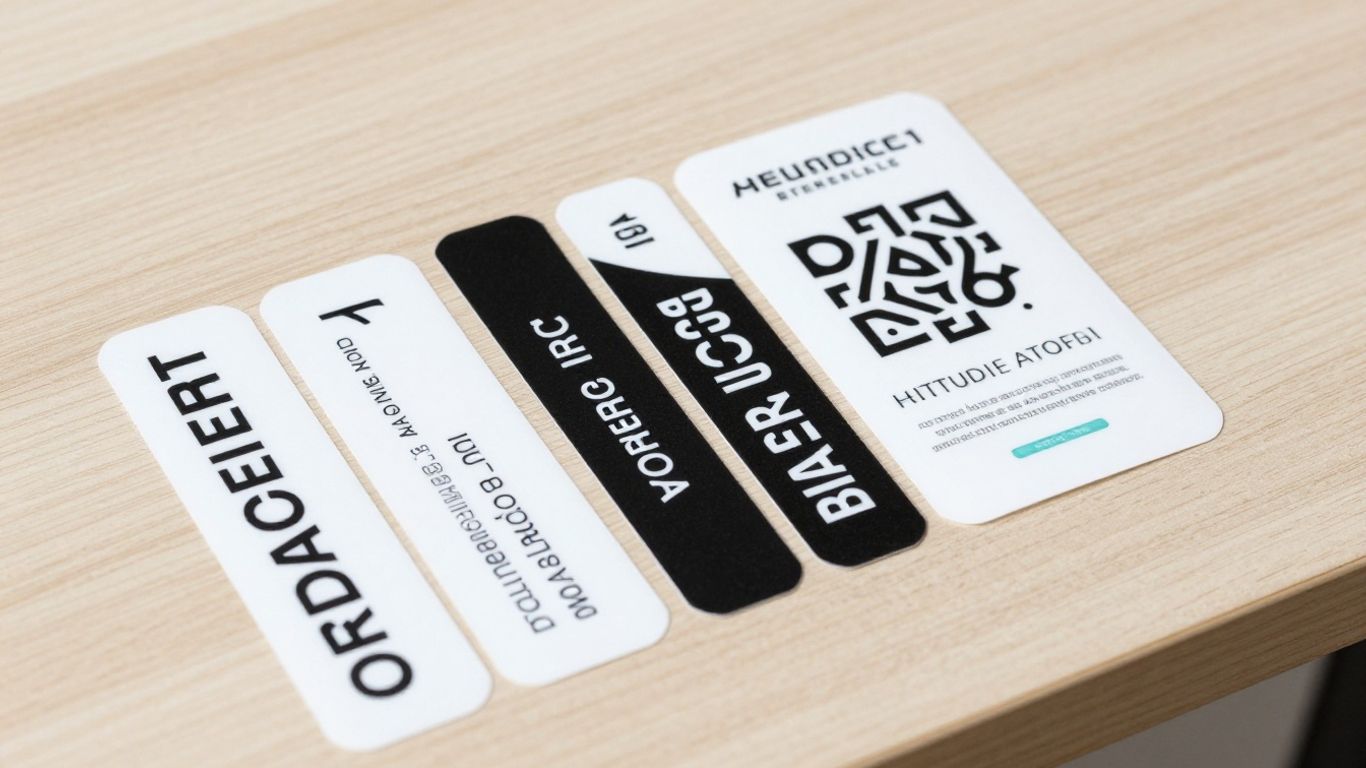
Designers often face a conflict between brand presence and functional utility. A design that prioritizes large, artistic logos may inadvertently sacrifice the readability of essential barcodes. Balancing visual clarity requires keeping the label designing software output refined, ensuring that the visual hierarchy supports both brand messaging and immediate machine recognition.
Setting the correct quiet zone and contrast levels
The "quiet zone" is the clear margin surrounding a barcode or QR code, which is vital for error-free scanning. Without this breathing room, sensors can confuse the code with surrounding graphic elements. By maintaining high contrast—such as black modules on a white background—you allow for fast, accurate scans even in low-light retail conditions.
Incorporating brand logos without compromising legibility
Your brand logo is the anchor of your product’s identity, but it must coexist with regulatory text and scannable codes. Intelligent placement involves integrating the logo in a peripheral area, leaving the center of the print surface for high-utility elements. We suggest using a label template early in your design process to map out these distinct functional and branding zones.
| Feature | Recommended Specification | Impact on Performance |
|---|---|---|
| Label Material | Polypropylene/Vinyl | High moisture/chemical resistance |
| Adhesive Type | High-tack/Permanent | Bonds to textured plastic/glass |
| Scan Area | Clear quiet zones | Ensures 100% scan first-time |
| Coating | UV-Resistant Laminate | Prevents fading and scratching |
The importance of digital proofs before full production
Testing your design on a digital proof is the most effective way to eliminate costly errors. A professional digital proof reveals how colors interact with chosen stocks and allows you to verify that the artwork maintains scannability at the final production size. This step is critical before committing to large volumes, ensuring every element is perfectly aligned for your target audience.
Integrating digital intelligence with QR technology
Using dynamic QR codes for updatable destinations
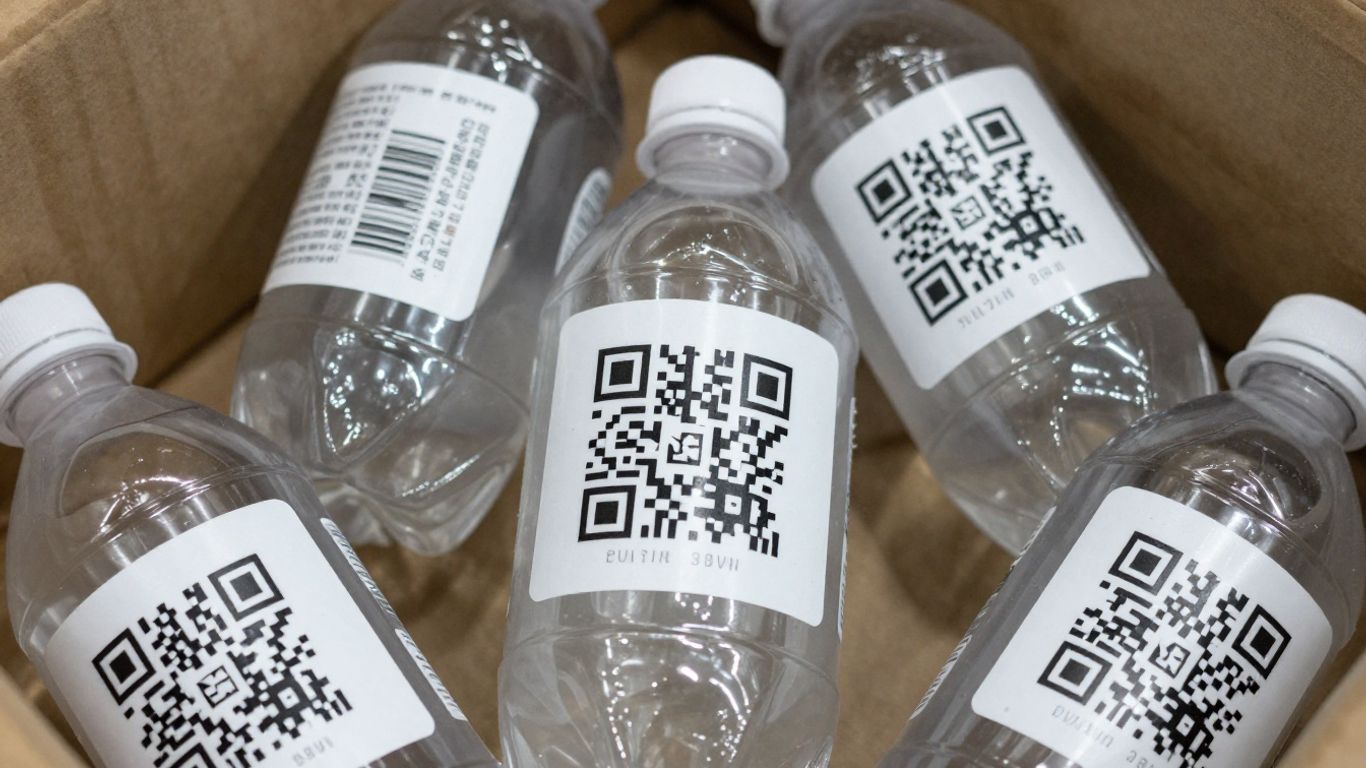
Static codes lock your digital strategy in place, whereas dynamic codes provide the agility to pivot information campaigns. Through platforms like Xcan.it, you can modify the landing page URL long after printing to reflect current inventory, product information, or seasonal promotions. This flexibility turns standard packaging into a live, interactive asset that adapts to your business needs.
Implementing sequential numbering for unique asset tracking
Sequential numbering offers a powerful way to audit and trace individual containers. When every bottle receives a unique, human-readable ID alongside a machine-readable code, inventory management becomes significantly more streamlined. This approach is widely adopted by firms looking to track assets with granular precision.
Connecting physical labels to digital product information
Modern logistics rely on the seamless bridge provided by QR technology. A quick tap or scan can deliver technical specifications, safety instructions, or sourcing history directly to a mobile device. Providing such instant access fosters consumer trust and adds significant perceived value to your physical product.
Creating seamless workflows with data platforms like Xcan.it
Integrating your labels with external data platforms creates an automated ecosystem that minimizes human input. By using QR Code Stickers for your workflows, you can feed scan data directly into your management software. This enables teams to coordinate task updates or manage compliance checks in real-time, removing the manual bottlenecks of traditional paper logs.
Tailoring shapes and sizes for different bottles
Selecting diameters for circular surfaces
Designing for a rounded surface requires a precise understanding of the container geometry. If a label is too wide for the curve, the edges may wrinkle or fail to adhere properly. Calculating the correct diameter early in the design stage ensures the label lays flat without distortion, maintaining a sleek and professional profile.
Aligning label dimensions with scan distance requirements
The physical size of a scan code is governed by the distance from which it is expected to be captured. A larger code is necessary if consumers or staff scan from a distance, whereas smaller, dense matrices work for handheld proximity scans. It is a balancing act of print density versus reading distance.
Custom die-cutting for unique bottle profiles
Standard rectangular labels rarely maximize the visual potential of custom-shaped bottles. Custom die-cutting allows the label to follow the natural contours of the bottle, creating a cohesive, high-end appearance. This focus on form factor transforms how customers perceive the premium quality of the product within.
Positioning for maximum visibility and ease of use
Where you place a label influences how often it is interacted with and how effectively it serves the user. Positioning on the shoulder or body of the bottle provides maximum visibility, while placement toward the base might be preferred for clutter-free brand aesthetics. Always prioritize placement that allows for one-handed operation and effortless camera alignment.
Best practices for label application and maintenance
Preparing surfaces for optimal adhesion
Even the most expensive, high-spec adhesive will fail if the underlying surface is contaminated. Dirt, oils, or residue from the bottling process create a physical barrier that prevents a secure bond. Using a light solvent wipe to clean the surface area ensures the adhesive achieves full contact, extending the operational life of the label.
Avoiding common pitfalls with textured or low-energy plastics
Textured plastics present a massive challenge because they offer very little surface area for the adhesive to grab onto. Relying on standard labels here typically leads to lifting edges. Specialized high-tack polymers are designed to flow into the microscopic crevices of these materials, creating a lasting bond that standard materials simply cannot achieve.
Techniques for smooth application on curved surfaces
Applying a label to a curve is an art that benefits from a consistent, central-outwards motion. Starting from the center and smoothing toward the edges prevents air bubbles from becoming trapped underneath. For mechanized application lines, using a roller mechanism ensures that the pressure is evenly distributed across the surface, which is critical for maintaining consistency.
Ensuring labels withstand cleaning, heat, and handling
Labels undergo significant mechanical and thermal stress after they reach the end user. If a product requires heated filling or heavy-duty caustic cleaning, the labels must be specified for these conditions. Incorporating free Avery label templates as a starting baseline often helps, but ensure your final spec includes the necessary laminates or protective finishes to survive the intended lifecycle.
Conclusion
By carefully selecting materials and integrating smart digital features like dynamic QR technology, you effectively transform simple labels into active tools for marketing and compliance. Focus on the durability of the adhesive and the clarity of your scan areas to ensure that your product remains functional throughout its journey from the warehouse shelf to the final customer experience.
Frequently Asked Questions
Are there specific materials best suited for refrigerated bottles?
Yes, look for moisture-resistant synthetic stocks and waterproof adhesives, which prevent labels from peeling when exposed to condensation or chilled storage.
How can I ensure my QR codes always scan on the first attempt?
Maintain a generous clear quiet zone around the code, ensure the label has high contrast, and test the digital design at the final printed size.
Is it possible to use dynamic QR codes on labels without printing new ones?
No, the printed static code is physical, but if you generate it through a dynamic platform, you can change the target URL and metadata at the system level.
What should I look for when labeling textured plastics?
Choose high-tack permanent adhesives that are engineered to bond to rougher, lower energy surface energy materials often used in industrial or budget tubs.
Why is a digital proof important before final production?
It allows for verification of scan reliability, colour matching, and layout accuracy, which prevents the production of unusable or illegible label batches.
Do round labels offer any functional scanning advantages?
Round labels provide a premium aesthetic on bottles, but you must ensure the square QR matrix is properly centered within the circular cutout during the design phase.
Can labels be made with tamper-evident features?
Yes, we offer destructible or void-pattern stocks that show clear evidence of removal, helping to maintain security and product integrity for your brand.