
Key Takeaways
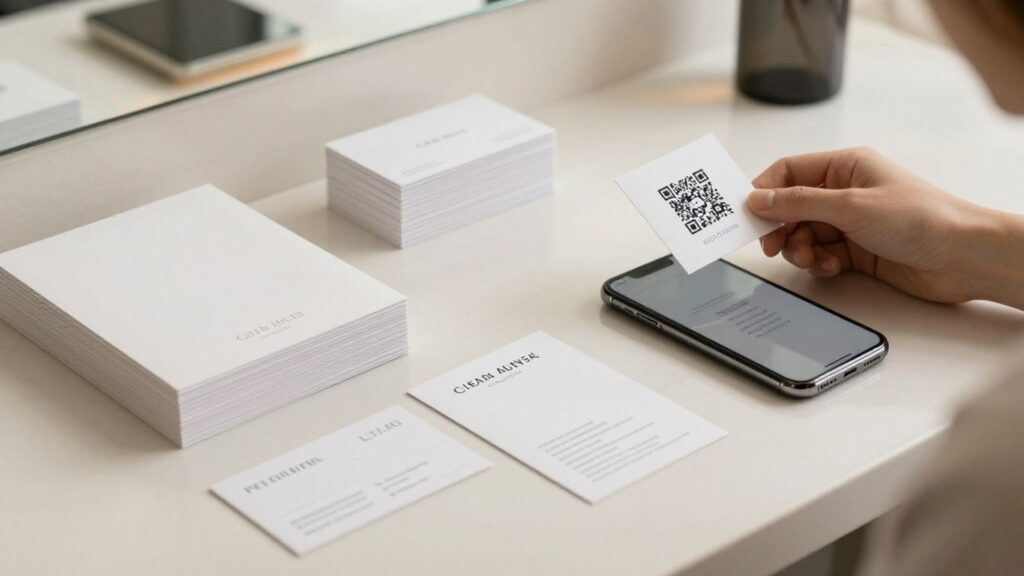
- Business cards represent a functional link between physical salon presence and digital client management systems.
- Modern hairdressers benefit from using dynamic QR codes to maintain up-to-date booking links without reprinting.
- Maintaining strict design standards, such as a proper quiet zone, is vital for ensuring mobile device scan reliability.
- Aligning card production with professional standards protects brand equity and improves long-term client retention.
- Utilising branded QR code stickers helps salon owners connect assets and equipment to digital instructional resources.
The shifting role of the modern hairdresser's business card
Moving beyond basic contact details
In modern salon operations, a business card serves as more than a simple souvenir; it functions as a primary touchpoint for lead conversion. Where traditional cards only offered static names and phone numbers, the contemporary versions are designed to act as gateways to your booking infrastructure. This shift acknowledges that clients expect instant action—whether that is scheduling a cut or checking price lists—rather than manual data entry.
Creating an instant digital connection with clients
By embedding direct pathways to digital business cards or booking portals, professionals remove friction during the scheduling process. This approach is highly effective for hairdresser business cards because it bypasses the need for potential customers to search for your salon on crowded social platforms. A code placed on the card essentially functions as a shortcut in the client’s pocket.
Improving client retention with one-tap mobile access
Providing digital convenience ensures that once a client takes your card, they are essentially linked to your internal booking system permanently. Strategically used QR code stickers can further assist when you have secondary equipment or retail product displays that need to provide immediate info to regulars. This one-tap access builds a reliable cycle of engagement that simple paper details cannot achieve on their own.
Why QR codes are essential for salon marketing
Bridging the gap between physical cards and online booking systems
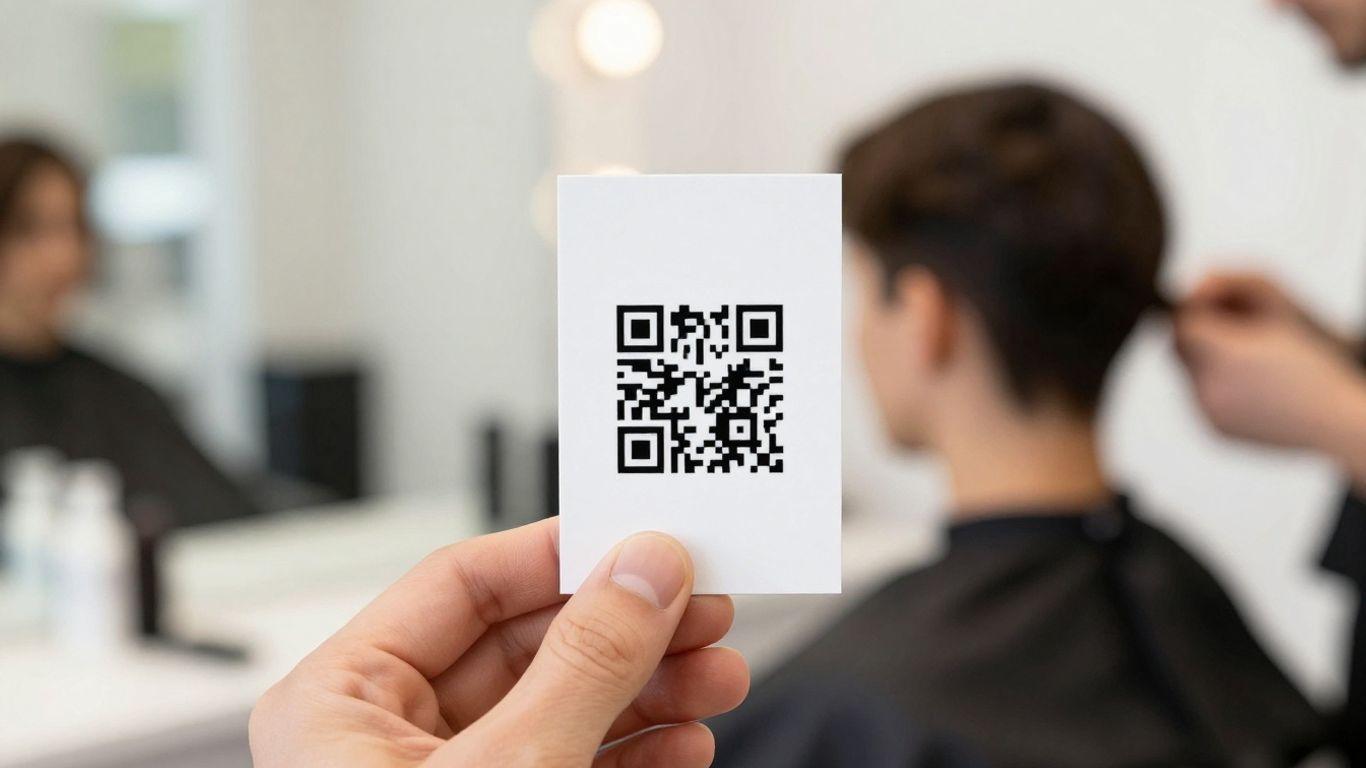
Salons often struggle with the disconnect between their physical business cards and their live availability. Using a code allows you to route traffic specifically to a booking engine like Vistaprint layouts, ensuring that every scan effectively turns interest into a concrete calendar appointment.
Offering seamless access to digital portfolios and professional Instagram profiles
Prospective clients want to see your handiwork before committing to a booking. Linking cards to a portfolio or Instagram feed acts as social proof, which is a common expectation in the industry; providing this evidence quickly helps build trust. Below is a comparison of common landing destinations for your salon QR codes:
| Destination Type | Benefit | Use Case |
|---|---|---|
| Booking Portal | Drives appointments | Immediate client conversion |
| Portfolio URL | Visual proof | Attracting new clients |
| Social Profile | Community building | Engagement & trends |
Encouraging immediate review engagement after a salon visit
Review acquisition is a major operational challenge for salon teams. Instead of waiting for customers to navigate to your profile, a card with a direct review link removes the barriers. Incorporating these cards at the reception desk ensures that you capitalize on the post-visit satisfaction window before the customer leaves the premises.
Design principles for professional hairdresser business cards
Prioritising high contrast for reliable mobile scanning
Scan success depends entirely on the contrast between the dark elements of the code and the light background of the card. Professional designers recommend avoiding low-contrast pairings like light yellow or grey ink, which often force the user’s camera to struggle. Stick to classic black-on-white or dark navy-on-white to maintain scan efficiency across all mobile models.
Selecting card finishes that enhance durability and print quality
The tactile quality of the card reflects the quality of your aesthetic services. Choosing finishes that prevent smudging or light reflection—such as matte lamination—ensures that the code remains clear during its time in a client’s wallet. This is particularly important for hairdresser business cards, as greasy skin or product residue can affect low-quality paper.
Balancing aesthetic salon branding with functional QR placement
Over-designing leads to poor scanning outcomes, especially when logos or graphics encroach on the code area. A balanced design respects the "quiet zone" and ensures the client knows exactly what to do. Consider the following workflow for professional placement:
- Select a high-resolution logo that aligns with your brand identity.
- Keep the QR code free from overlapping text or graphical elements.
- Position the code on the back of the card to save room for contact details.
- Test the design with at least two different smartphones before submitting for final print.
Choosing the right QR code solution for your salon
Static versus dynamic codes for business cards
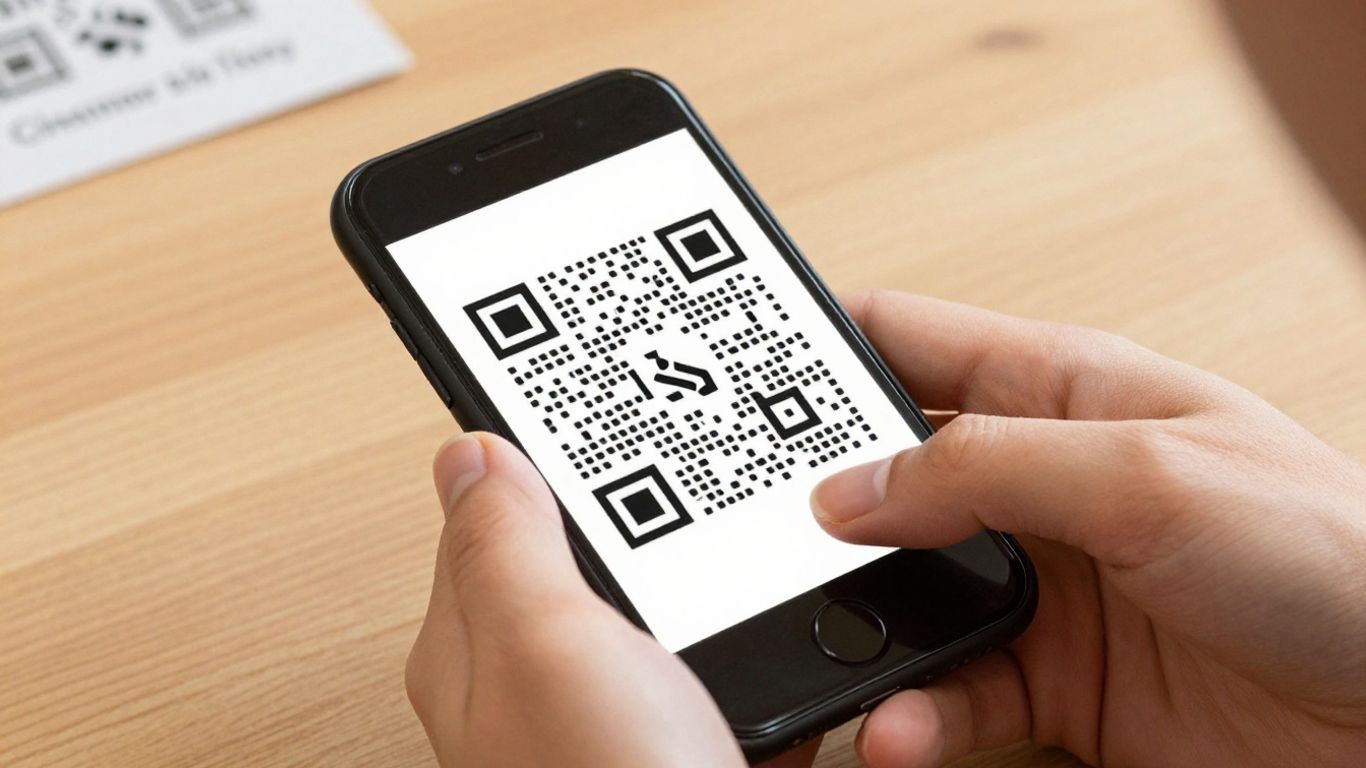
Static codes contain the data directly in their pattern, meaning you cannot change the destination link once printed. Dynamic codes, however, allow you to update the URL in your backend, such as when you change your booking platform or website provider. For busy salons, the flexibility of dynamic options prevents the need for costly reprinting. Here is a note on proper setup:
Relying on a custom subdomain for your dynamic links builds credibility and ensures your salon brand remains consistent in the browser bar even when redirecting clients to third-party booking software.
Managing updates to service menus or price lists without reprinting cards
Salons regularly update pricing or service tiers to match seasonal demand. Using a dynamic solution means your card stays current indefinitely, protecting your budget from waste. If you find your physical print media is becoming worn or smudged, it may be time to consult an expert regarding durable business cards and high-quality finishes that stand up to daily use.
Selecting appropriate error correction levels for long-term scannability
Error correction levels determine how much of a QR code can be damaged while remaining scannable. For business cards where wear is inevitable over time, selecting a higher level of correction (such as level M or H) is advisable. This technical tweak adds a layer of redundancy, ensuring the code remainsfunctional even with minor scratches or corner wear.
Best practices for distribution and client interaction
Placing QR codes for optimal engagement in a busy salon environment
Cards are only effective if they get into the right hands at the right time. Place your cards near the checkout station where your team can naturally hand them to clients as the final step of their visit. When your stylists discuss the booking system, a direct, physical reference like a card makes that conversation feel more tangible.
Ensuring cards remain scannable across various lighting conditions
Indoor salon lighting can sometimes create glare on glossy print surfaces, which interferes with mobile cameras. Testing your cards under the same light conditions where you intend to distribute them will reveal if your choice of paper stock is causing issues. Matte or silk finishes are almost always the safer bet for print visibility.
Using scan analytics to measure the effectiveness of your networking
By tracking volume, you gain insight into which cards or events bring in the most bookings. Monitoring scan rates helps you evaluate your small business marketing strategy and refine the information you provide on your physical cards. This data-driven approach removes the guesswork from your networking activities.
Technical specifications for high-quality production
Determining the ideal physical size for camera lock-on at arm's length
For a standard card, keeping the code between 20mm and 25mm in size allows modern smartphone cameras to lock on instantly from an arm’s length. Avoid making the code too small, as the camera focus will hunt for the modules, leading to user frustration. Proper sizing ensures the code performs predictably in real-world scenarios.
Avoiding common pitfalls like overcrowding the quiet zone
Every QR code requires a boundary of white space around it, known as the quiet zone. Overcrowding this area with text, frame borders, or brand imagery is the most frequent design failure. It confuses the scanner, which cannot distinguish the code container from the surrounding visual noise.
Why professional printing ensures consistent performance for your business cards
Mass-printing at home often leads to inconsistent ink density, which wreaks havoc on digital scanning. Professional print services use high-resolution devices that maintain sharp edges on every matrix module. This level of quality control ensures your card remains a functional marketing asset for the duration of its lifespan.
Conclusion
Effectively using business cards for hairdressers involves balancing tactile professional appeal with the technical demands of digital connectivity. By standardising your design with high-contrast elements, respecting quiet zones, and opting for dynamic links, you turn an ordinary card into a resilient, actionable marketing tool. Consistency in these details will strengthen your brand and simplify the booking journey for every client you encounter.
Frequently Asked Questions
How small can a QR code be on a business card?
A code should ideally measure between 20mm and 25mm to ensure reliable scanning for most smartphone cameras at a standard arm’s distance.
Should I choose a vCard or a website URL?
Choose a vCard if you want users to save your contact information directly into their address book; choose a short website URL if you want them to visit your studio portfolio or booking platform.
Do clients need an app to scan my business card?
No, most modern smartphones have built-in QR scanners within their standard camera application, making the process intuitive and fast for the user.
Is it worth paying for dynamic QR codes?
Yes, dynamic codes offer the operational benefit of changing links without reprinting, which saves money and prevents waste for any salon that updates its menus or services.
What file type is best for business card printing?
Vector graphics such as SVG or high-resolution PDF are the preferred industry standards for printing, as they retain sharp, crisp edges that improve code readability.
Can I add my salon logo to the code?
Yes, you can add a logo to a QR code, but you must ensure the logo size is modest and you use higher error-correction levels to maintain scan integrity.
How can I make my business card feel more professional?
Focus on paper stock quality, choosing a matte finish over glossy to reduce glare, and ensuring your typography and colour usage remain clean and legible.